

Curious how your company can optimally benefit from the opportunities within the avocado oil wholesale market in 2026? In this comprehensive guide, you will discover everything you need to know about this fast-growing market.
We guide you through the benefits of avocado oil, current market analysis, quality criteria, smart purchasing strategies, logistics, price developments, and selecting the right suppliers.
Whether you are a buyer, producer, or retailer, this knowledge will help you make well-informed decisions that advance your company in the avocado oil wholesale market.
The Rise of Avocado Oil in Wholesale
The avocado oil wholesale market has experienced impressive growth in recent years. Companies see more and more opportunities in this versatile oil, both in food and cosmetics. Due to rising demand and innovation in applications, the landscape is changing rapidly. In this section, you will discover why avocado oil wholesale is making such a strong advance, which trends and applications are central, and how sustainability and market dynamics influence your purchasing strategy.
Market Growth and Trends
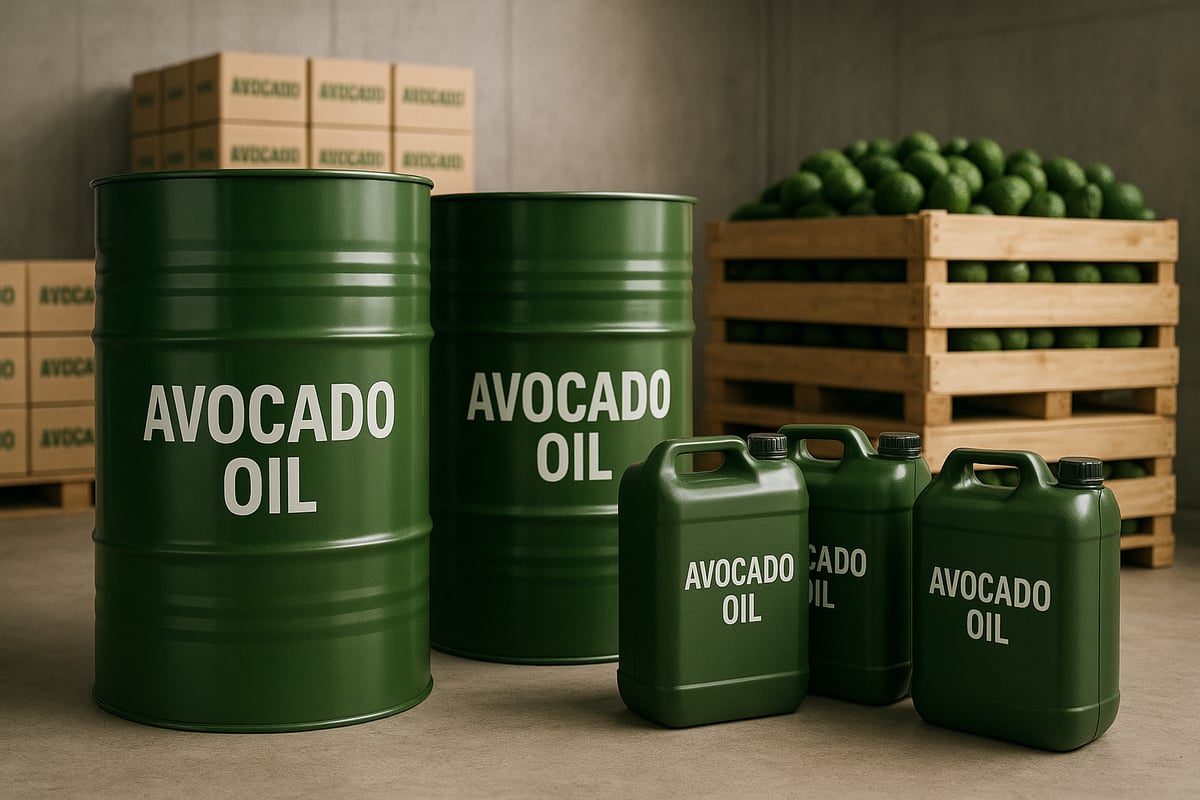
The global avocado oil wholesale market is growing rapidly between 2023 and 2026. According to recent market analyses, demand for avocado oil has increased by double digits, especially in Europe and North America. Key markets are cosmetics, food, and wellness. Sustainability and organic certification play an increasingly important role, with companies choosing certified, cold-pressed, and pure oils.
Consumers actively seek vegan and allergen-free products. Health and natural ingredients are central to purchasing decisions. Private label and white label solutions are also gaining ground, allowing B2B parties to flexibly respond to customer needs. More information about these developments can be found in the article Global Avocado Market Grows Strongly.
Key Applications of Avocado Oil
Avocado oil wholesale serves a wide range of applications. In cosmetics, the oil is used in skincare, hair products, and massage oils. For food, avocado oil is popular in salad dressings, for frying, and as a cooking base. Within wellness, the use of avocado oil is growing in aromatherapy and spas.
The distinction between food grade and cosmetic grade oil is essential: food grade meets stricter food safety standards. Examples of products with avocado oil include natural creams, dietary supplements, and DIY beauty products. The B2B demand for avocado oil has increased by more than 20% in recent years, partly due to the rise of artisanal and niche brands.
Sustainability and Ethical Supply Chain
Sustainability is a core focus within avocado oil wholesale. Companies pay close attention to sustainable cultivation and fair trade practices. Certifications like organic, fair trade, vegan, and cruelty-free are often required when purchasing. Transparency about origin and production processes is becoming increasingly important, partly due to rising market demands.
Environmental impact, such as CO2 footprint and water use, plays a major role in supplier selection. Consumers consciously choose ethical products, which further drives demand for certified avocado oil. A good example is producers who offer fully traceable and certified avocado oil to wholesalers.
Opportunities and Challenges for Wholesalers
Opportunities for avocado oil wholesale mainly lie in growing market demand and the development of new applications. At the same time, there are challenges, such as fluctuating prices due to variations in harvest and raw material availability. Competition with other vegetable oils requires distinctiveness and quality assurance.
Quality and traceability are essential, partly due to stricter regulations around import and labeling. Climate change directly affects avocado harvests, which can impact availability and price. The advice for buyers is to invest in long-term relationships with producers for stable supply and price security.
Quality, Origin, and Certification of Avocado Oil
Ensuring quality, origin, and certification is essential for every buyer active in avocado oil wholesale. In this section, you will discover what to look for when purchasing, how to ensure traceability, and which certifications make a difference. This gives you the right tools to confidently select avocado oil wholesale products.
Quality Criteria for Purchasing
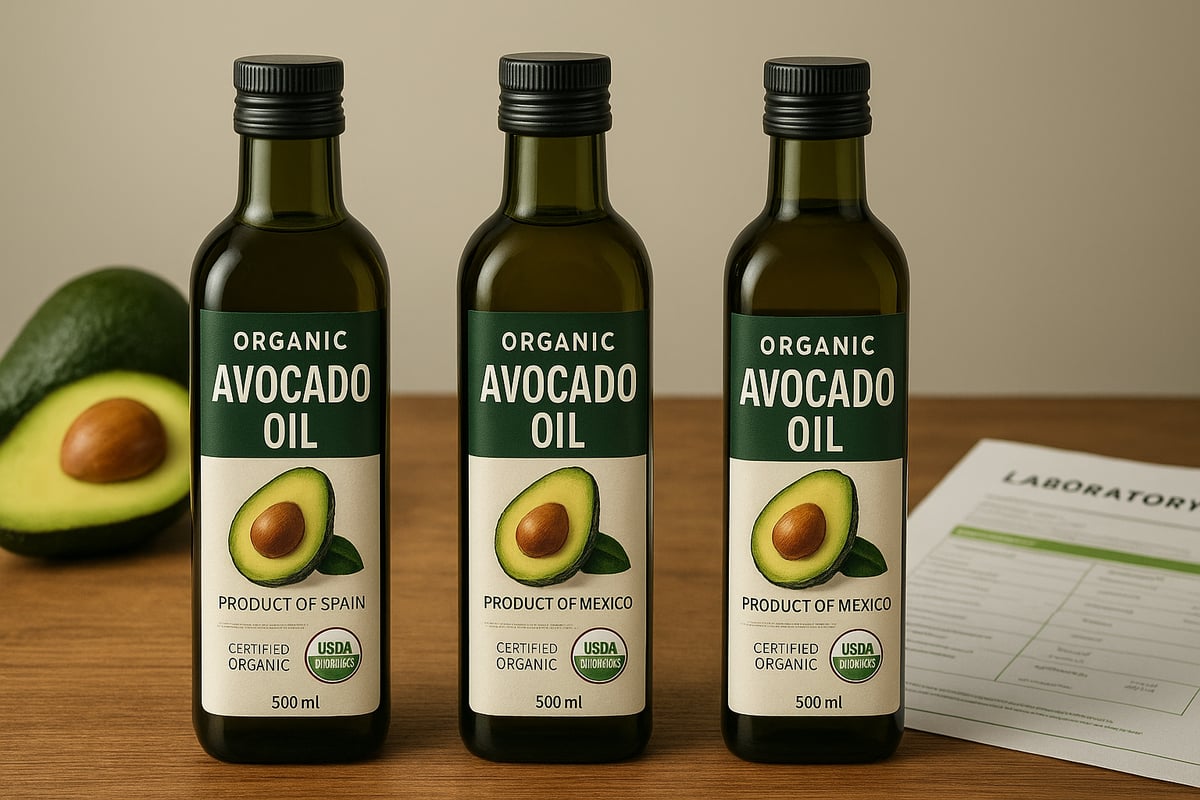
For avocado oil wholesale, it is important to distinguish between cold-pressed and refined oil. Cold-pressed oil retains more nutrients and aroma, while refined oil is more neutral and often cheaper. Pay attention to purity: always choose 100% avocado oil without additives.
Analysis of aroma, color, and viscosity helps assess quality. Ask suppliers for laboratory reports such as PDS, SDS, and CoA. Check allergen information and safety, especially for use in food or cosmetics. Quality differences between suppliers are often visible in color and aroma.
Want to learn more about the quality standards and required documentation for avocado oil wholesale? Then check out the comprehensive quality criteria and oil documentation.
Origin and Traceability
The main production countries for avocado oil wholesale are Kenya, Mexico, and South Africa. Origin significantly influences the oil’s taste, aroma, and color. Traceability from seed to bottle is crucial for transparency.
In avocado oil wholesale, pay attention to a transparent supply chain, with certificates of origin available. Request origin certificates and chain documentation. Regional differences, such as climate and soil type, create unique oil characteristics. Transparency throughout the entire chain is an important selection criterion.
Practical tip: always ask questions about the production process and get informed about the entire supply chain in the avocado oil wholesale market.
Organic and Sustainable Certifications
For avocado oil wholesale, certifications such as EU Organic, USDA Organic, and Ecocert are very important. These certificates prove that the oil meets strict standards for sustainability and organic production.
Certified avocado oil wholesale products offer advantages in market access, consumer trust, and pricing. Verify that suppliers are periodically audited and comply with all European labeling requirements.
Note: consumers increasingly prefer certified products. Certification costs are usually quickly recouped through higher margins and better positioning. Always check labels for correct certificate information in the avocado oil wholesale market.
Safety, Storage, and Shelf Life
Proper storage is essential to maintain the quality of avocado oil wholesale products. Store oil in dark, airtight containers at room temperature to prevent oxidation. Light, oxygen, and heat accelerate quality loss.
Always check batch numbers and production dates for traceability. Legal labeling requirements apply to both food-grade and cosmetic-grade products within the avocado oil wholesale market.
For bulk purchases: ensure a cool, dry storage area and use food-safe materials. Safety instructions for transport and handling must be clearly communicated to all involved.
Oliemeesters: Your Partner in Organic Avocado Oil
Oliemeesters is a specialist in the avocado oil wholesale market, focused on organic, cold-pressed oil with full traceability and certification. They supply both B2B and B2C, from bulk to private label solutions.
Oliemeesters provides extensive documentation such as PDS, CoA, and SDS. Deliveries take place throughout Europe, with competitive wholesale prices. Customer service and tailored advice are standard.
Choose from various packaging sizes, ranging from 2.3 kg to 190 kg drums. This way, Oliemeesters offers flexibility for every need within the avocado oil wholesale market.
Step-by-step plan: Avocado Oil Purchasing Process in 2026
Do you want to purchase efficiently and successfully as a professional in the avocado oil wholesale market in 2026? This step-by-step plan provides you with a clear path from needs assessment to market introduction. Follow each step to make the right choices for your business.
Step 1: Determine Market Needs and Specifications
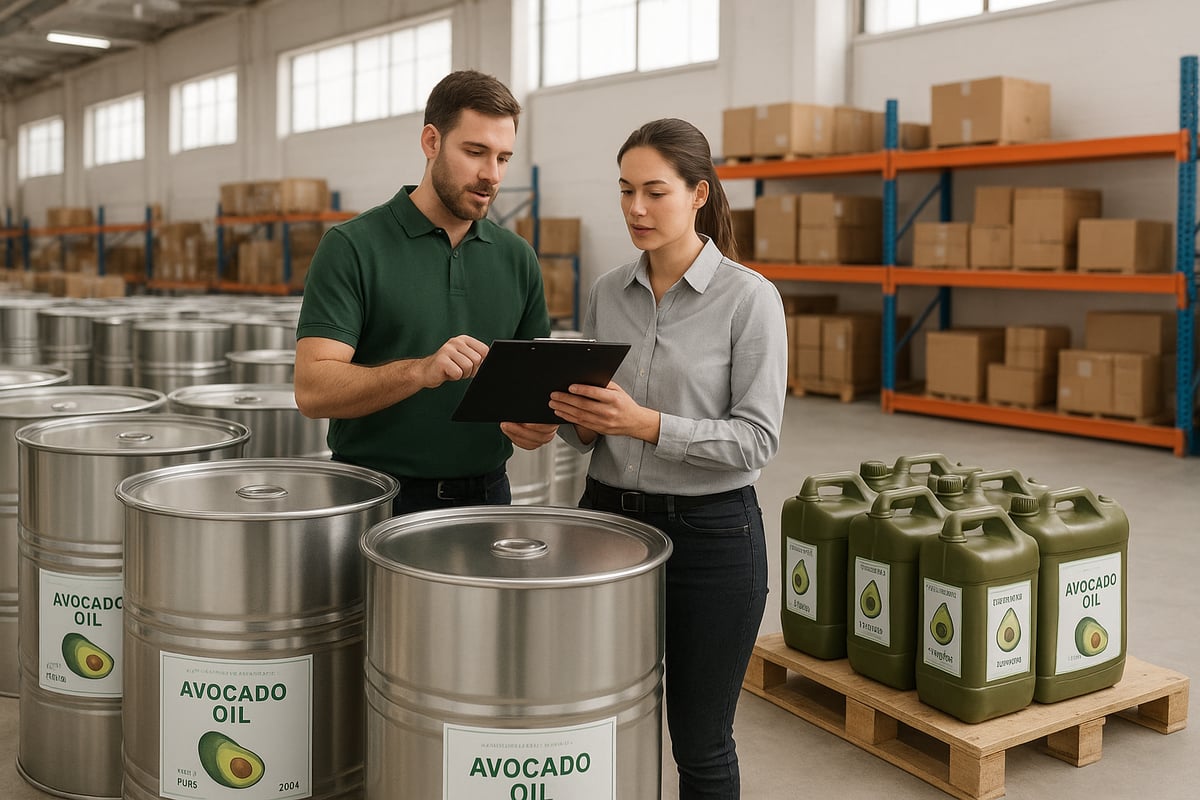
Successfully starting in the avocado oil wholesale business begins with determining your specific market needs. Decide whether you will use the oil for cosmetics, food, or wellness. Make a volume estimate based on your sales forecasts.
Also set clear requirements for quality, certification, and packaging. Analyze customer needs and trends so your products match demand. For example, consider a private label skincare line or bulk packaging for food service.
Checklist for this step:
- Intended use (cosmetic, food, wellness)
- Desired certification (organic, fair trade)
- Packaging and volume
- Quality and allergen requirements
Flexibility in your purchasing strategy is essential here, as the avocado oil wholesale market can change quickly.
Step 2: Supplier Selection and Comparing Quotes
The next step is selecting reliable suppliers. Look at certifications, pricing, and delivery terms. Always request documentation about origin and quality, such as CoA, SDS, and PDS.
Compare quotes carefully on price and quality. Note differences between local and international suppliers. Visit producers or trade fairs to get a good impression of the offerings. Also check references and customer reviews.
For a complete overview of bulk options, check the Wholesale Bulk List of Vegetable Oils for avocado oil wholesale.
Step 3: Quality Control and Contract Agreements
Quality assurance is crucial in the avocado oil wholesale business. Always request quality documentation, such as a CoA, SDS, and PDS. Order samples for test analyses if possible, so you can be sure the oil meets your requirements.
Record agreements in delivery contracts and SLAs. Consider return policies, complaint handling, and liability. Also discuss securing continuity in delivery to avoid surprises.
Example: compare test results from different batches to identify quality differences.
Step 4: Logistics, Storage, and Distribution
Good logistics and storage are essential for ensuring quality and continuity. Choose between storage in your own warehouse or dropshipping. Determine which transport options are suitable: bulk, jerrycans, or drums.
Manage your inventory carefully and consider shelf life. Insure the cargo during transport and ensure traceability. Collaborate with logistics partners and schedule deliveries around seasonal influences.
For large volumes in avocado oil wholesale, good storage advice is essential.
Step 5: Pricing Strategy and Cost Control
In avocado oil wholesale, understanding price composition is indispensable. Consider raw material price, transportation, packaging, and margin. Market fluctuations can quickly affect purchase prices, so monitor them actively.
Take advantage of bulk discounts, tiered pricing, and contractual price agreements. Compare costs across different volumes and negotiate firmly with your supplier. Good financial planning and cash flow management are essential to minimize risks.
Tip: record price agreements in contracts and consider indexation.
Step 6: Market Introduction and Product Development
After a successful purchase, it’s time to integrate avocado oil wholesale into your product range. Develop new product lines or add the oil to existing products. Focus on marketing strategies for both B2B and B2C.
Position your avocado oil based on quality and sustainability. Gather feedback from customers and partners to improve your offering. Keep innovating by developing new applications and blends, and monitor sales results for further optimization.
A well-planned introduction increases your success in the fast-growing avocado oil wholesale market.
Price Development and Market Analysis 2026
The avocado oil wholesale market faces unique challenges and opportunities in price development and market analysis in 2026. With growing global demand and shifting market trends, understanding price mechanisms is essential for a successful purchasing strategy. This section discusses current price levels, key price-determining factors, comparisons with alternative oils, and smart purchasing strategies.
Current Price Levels and Expectations
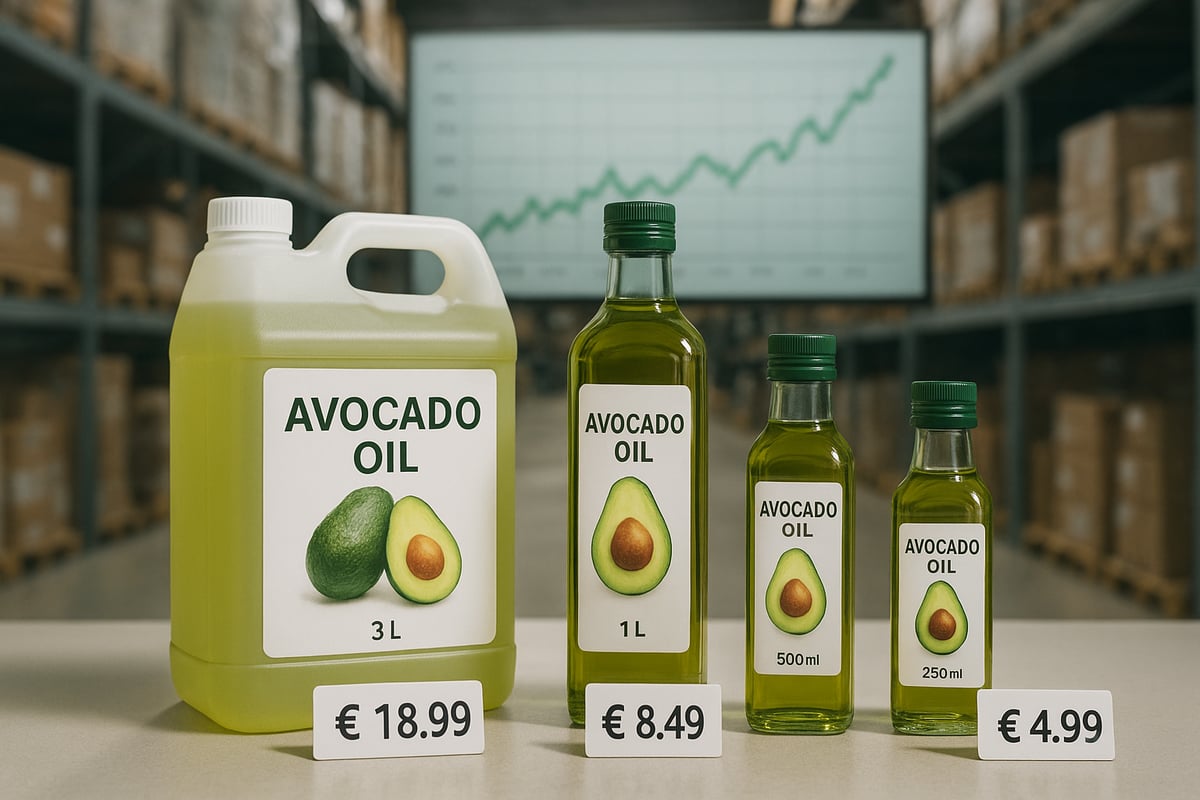
In the avocado oil wholesale market, the price per kilogram or liter varies widely depending on the market segment and volume. In 2024, the bulk price averaged between €8 and €14 per liter, depending on whether it was food or cosmetic grade oil. Prices are sensitive to the harvest season and global supply. Food grade oil generally remains slightly more affordable than cosmetic grade, especially in large volumes.
Over the past three years, the average price has increased by about 12 percent, driven by transportation and energy costs. Market analysts expect further price increases by 2026, partly due to rising demand and limited availability. For current market trends and forecasts, the report Avocado Oil Market Trends offers valuable insights into organic and cold-pressed varieties.
Factors Influencing Price and Availability
The avocado oil wholesale trade is directly affected by factors such as climate change, which makes harvest results unpredictable. Extreme drought or excessive rainfall can lead to lower yields and higher prices. At the same time, growing demand from the food and cosmetics sectors drives scarcity.
Transport and energy prices fluctuate significantly, impacting the total cost price. Import duties and international trade tensions can add extra uncertainty. The availability of certified organic oil varies greatly by season. For buyers, it is essential to spread risks and purchase flexibly within the avocado oil wholesale market.
Comparison with Other Vegetable Oils
Within the avocado oil wholesale trade, it is valuable to compare prices and characteristics with alternatives such as olive oil, argan oil, and coconut oil. Avocado oil is generally more expensive than standard olive oil but has a higher content of unsaturated fatty acids and is often appreciated for its mild flavor and versatility.
The ecological footprint of avocado oil varies depending on origin and cultivation method. Consumers increasingly choose avocado oil for its health benefits and sustainable reputation. Margins on avocado oil are often higher than on conventional oils, but investment risks are also greater. Diversifying the product range offers protection against price fluctuations.
Purchasing Strategies for Price Optimization
Smart purchasing strategies are indispensable in the avocado oil wholesale trade to achieve price advantages. Long-term contracts offer security for large volumes, while spot buying provides flexibility with fluctuating prices. Collaboration with producers and cooperatives can yield volume discounts and better terms.
Collective purchasing and bundling orders with other buyers often provide extra benefits. By actively monitoring market trends and price alerts, buyers can determine the best time to purchase. Flexible agreements and sound financial planning are essential to fully benefit from price developments within the avocado oil wholesale market.
Legal and Regulatory Aspects of Avocado Oil Wholesale
The legal and regulatory aspects form the backbone of a successful avocado oil wholesale business. Without in-depth knowledge of laws and regulations, buyers risk delays, fines, or even blocks during import and sales. In this chapter, you will discover which rules are essential for your wholesale business, from import to contracts.
EU Regulations and Import Requirements
If you are active in the avocado oil wholesale trade, you will encounter strict EU regulations. Importing vegetable oils requires proper documentation, such as certificates of origin and organic certification. Product information on labels must comply with European requirements, including clear listing of ingredients and allergens.
The NVWA and EFSA conduct random compliance checks. Non-compliant products can be refused or recalled. It is advisable to work with experienced importers and use specialized resources like the Organic Oils Wholesale Guide for up-to-date information on import requirements and labeling.
Make sure every shipment has the correct documents to avoid delays. Transparency in the supply chain helps with fast customs clearance, which is essential for an efficient avocado oil wholesale business.
Food Safety and Cosmetics Legislation
Food safety is central in the avocado oil wholesale trade, especially if you import food-grade products. HACCP protocols are mandatory, and traceability must be guaranteed from seed to bottle. For cosmetics, additional rules apply: labels must include INCI names, and claims such as “hypoallergenic” or “organic” must be verifiable.
In case of recalls or allergen notifications, it is important to act quickly. Regular audits and proper storage conditions reduce risks. Remember that liability for damage or recalls can always fall back on the wholesaler.
Therefore, ensure your processes are fully compliant so you are seen as a reliable player in the avocado oil wholesale market.
Sustainability and Ethical Claims
Sustainability claims are becoming increasingly important in the avocado oil wholesale trade. Legally, you may only communicate about organic, vegan, or fair trade attributes if you can support them with certificates. Controls against greenwashing are strict, and regulators demand transparency towards buyers.
The use of certifications like EU Organic or Ecocert must be demonstrable through audits and documentation. Communicate clearly about the origin and production method of your oil. This increases customer trust and reduces the risk of sanctions.
Ensure that communication about sustainability is always factual and verifiable. This prevents reputational damage and legal disputes within the avocado oil wholesale trade.
Contracts and Cooperation Agreements
Clear contracts are the foundation of a stable avocado oil wholesale business. Record agreements on price, quality, delivery, and liability, and use SLAs to guarantee delivery reliability. Flexibility is important, especially with unexpected market fluctuations or delivery issues.
Legal advice on international transactions prevents misunderstandings. In case of disputes, you can consider mediation as an alternative to lengthy procedures. Use checklists to ensure all relevant points are included in the contract.
A good contract protects both buyer and seller and ensures that your avocado oil wholesale business can grow sustainably.
Practical Tips for Successful Purchasing and Growth Strategy
In a fast-growing market like avocado oil wholesale, it is essential to continuously optimize your processes and strategies. Success starts with thoughtful planning, strong relationships, and leveraging innovation. With these practical tips, you build sustainable growth and a future-proof position.
Purchasing Planning and Risk Management
A successful avocado oil wholesale business starts with tight purchasing planning. Make an annual plan based on seasonal influences and expected demand. Analyze risks such as price fluctuations or delivery issues and build buffer stocks where possible.
Work with alternative suppliers for more security. Use digital tools for real-time inventory management and forecasting. Consider scenarios for sudden demand spikes or transport delays. Collaboration with industry organizations can help you spread risks and keep market information up to date.
Periodically evaluate your purchasing strategy so you can adjust flexibly to market changes. This keeps your avocado oil wholesale business resilient and future-proof.
Supplier Relationship Management
Long-term partnerships form the foundation of every avocado oil wholesale business. Invest in open communication and regular feedback sessions. Through joint innovation, such as private label projects, you can grow together and respond to trends.
Visit your producers, conduct audits, and make clear agreements about conditions and prices. Transparency and trust lead to smoother negotiations and more stable deliveries. Consider co-creation, for example by collaborating on private label essential oils, which can create additional added value.
Strong relationships often mean better terms, faster delivery, and greater flexibility within the avocado oil wholesale business.
Innovation and Product Development
Innovation is crucial to stand out in the avocado oil wholesale market. Follow market trends such as blends and new applications, for example in wellness or food. Develop premium and niche products that cater to specific customer needs.
Use customer data and feedback to improve existing products. Collaborate with R&D teams for innovative packaging or sustainable solutions. Test new concepts in small batches before scaling up.
By investing in innovation and, for example, developing new private label lines, your avocado oil wholesale business remains attractive to various target groups and markets.
Marketing and Positioning
Strong marketing and clear positioning make the difference in the avocado oil wholesale business. Emphasize unique selling points such as sustainability, origin, and quality. Use storytelling to powerfully communicate the story behind your products.
Use certificates and quality marks in your marketing to build trust with customers. Combine online and offline promotion channels for maximum visibility. An inspiring example can be found in the article about the growth market and industry association AOMA, which promotes innovation and sustainability in the sector.
Educating customers about the uses of avocado oil contributes to a strong market position and higher customer loyalty.
Scalability and International Growth
Want to grow your avocado oil wholesale business? Consider scaling up production and distribution, and explore market opportunities in other EU countries. Adapt your strategy to local regulations and preferences to succeed in new markets.
Collaboration with international wholesalers and leveraging digital sales channels such as e-commerce accelerate your growth. Start with phased expansion to manage risks.
Example: expanding to Germany or France can generate additional sales, provided you respond to local requirements and trends. This way, you build international scalability step by step.
Monitoring, Evaluation, and Adjustment
Continuous monitoring and evaluation are essential for a successful avocado oil wholesale business. Set clear KPIs for purchasing, sales, and customer satisfaction. Periodically evaluate suppliers and products based on performance and feedback.
Use data analysis to identify trends and support decisions. Adjust your strategy when sales figures or market conditions change. Actively collect customer feedback and share insights within the team.
Keep investing in knowledge sharing and training so your avocado oil wholesale business remains flexible and future-oriented.
Now that you know exactly what to look for when purchasing avocado oil and which trends will shape the market in 2026, you are stronger in your choices as a buyer or producer. Whether you are looking for a reliable partner for bulk quantities, private label solutions, or fast delivery of pure, certified avocado oil, at Oliemeesters you will find everything clearly and transparently. Want to benefit directly from our expertise and competitive wholesale prices for your next order? Check out our selection and Order now – fast delivery within 1-5 days.