

Demand for organic oils is growing faster than ever in 2026, both within the food industry and in cosmetics and wellness. Are you active in organic oils wholesale or want to start successfully? Then this guide is your indispensable source for market analysis, product types, quality standards, purchasing strategies, regulations, and the latest trends. With current figures, inspiring growth opportunities, and practical tips, you’ll discover how to stay ahead in this thriving market. Take the first step toward success in organic oils wholesale today.
The Organic Oils Market in 2026
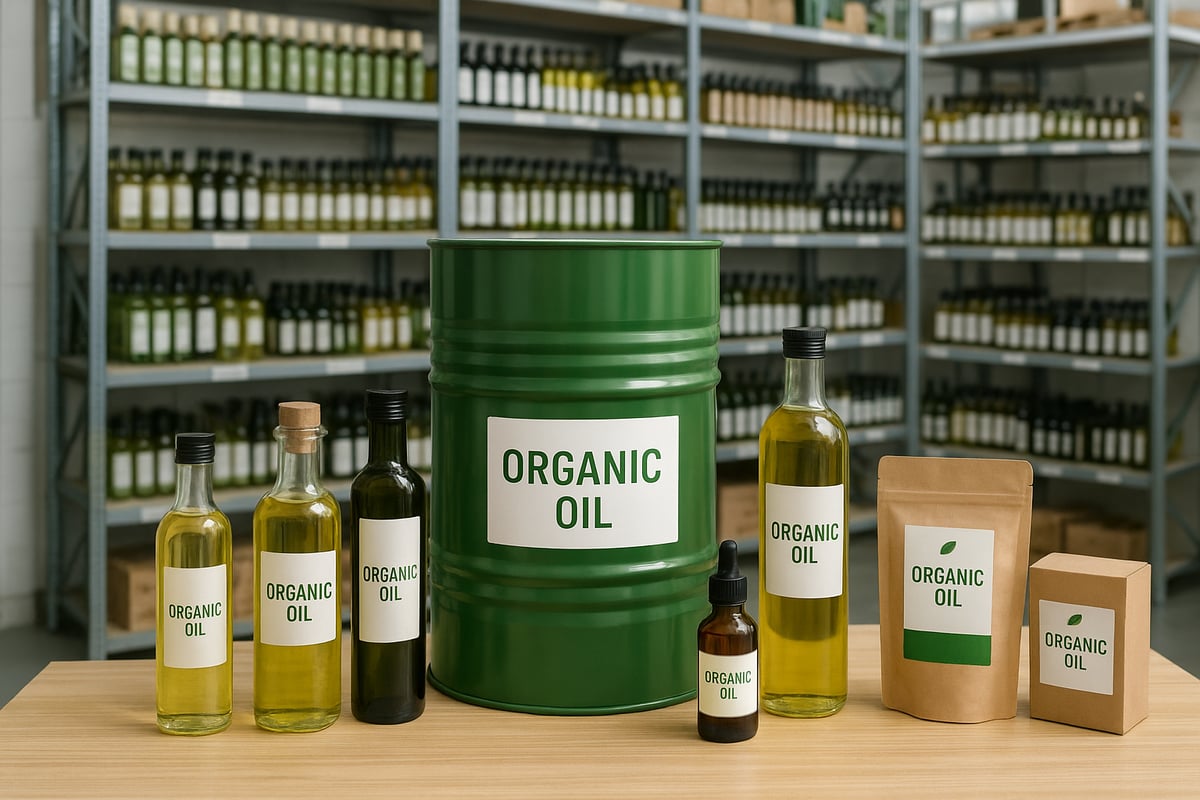
The market for organic oils wholesale experiences unprecedented growth in 2026. More and more companies and consumers consciously choose sustainable, certified oils. This is driven not only by health trends but also by rising demand for transparency and environmentally friendly production. Organic oils wholesale plays a key role in this development and offers plenty of opportunities for entrepreneurs who want to capitalize on the latest trends.
Growth and trends in the sector
The global revenue of organic oils wholesale shows impressive growth between 2022 and 2026, with an expected CAGR of over 7%. Especially the food industry, cosmetics, wellness, and pharmaceutical sectors drive a strong increase in demand. Sustainability and transparency have become indispensable in purchasing decisions for both companies and consumers.
Notable is the rise of niche oils such as baobab, hemp seed, and black cumin seed oil. These products stand out due to unique properties and growing popularity among health and beauty brands. Europe continues to lead in organic certification and quality standards. European wholesalers score high on customer satisfaction, with an average of 9.3/10 according to Feedback Company.
Digitization accelerates international trade. Online B2B platforms make it easier to do business worldwide and quickly respond to market developments. Transparency in the supply chain and up-to-date product information are essential for every organic oils wholesaler.
Table: Key trends in organic oils wholesale 2026
| Trend | Impact on wholesale |
|---|---|
| Sustainability | Mandatory certification |
| Rise of niche oils | New market opportunities |
| Digitization | Faster transactions |
| Transparency | Higher customer satisfaction |
Main customers and applications
The market for organic oils wholesale is broad. In the food sector, wholesalers supply producers of organic food products, hospitality businesses, and artisanal bakeries. Cosmetics and wellness brands use pure oils for skin and hair care, private label, and spas.
The aromatherapy and supplements industries are also important buyers. Additionally, the DIY market is growing, where retailers with their own private label focus on organic ingredients. A good example of an oil with rapidly rising demand is jojoba oil, especially in skincare and natural cosmetics. You can read more about this in the article Jojoba oil wholesale trends, which highlights the latest developments in this product category.
Besides jojoba oil, the popularity of organic almond oil is also increasing, especially due to its versatile use in both food and cosmetics. This underscores the importance of a broad and deep assortment within every organic oils wholesale business.
Market challenges and opportunities
Despite growth, there are challenges every organic oils wholesaler must consider. Price volatility due to harvest fluctuations can pressure margins. Certification requirements are becoming stricter, making transparency and documentation essential.
However, there are plenty of opportunities. More and more companies are opting for private label or custom blends, allowing them to stand out. Demand for sustainable packaging is also rising, offering new possibilities for innovation. By smartly responding to these developments, wholesalers can strengthen their market position and capitalize on future opportunities within the organic oils wholesale trade.
Types of Organic Oils and Their Applications
In the organic oils wholesale trade, everything revolves around diversity, purity, and quality. Each oil has unique properties and uses in food, cosmetics, and wellness. By choosing the right assortment, wholesalers can meet diverse customer needs and seize new market opportunities.
Vegetable oils: overview and properties
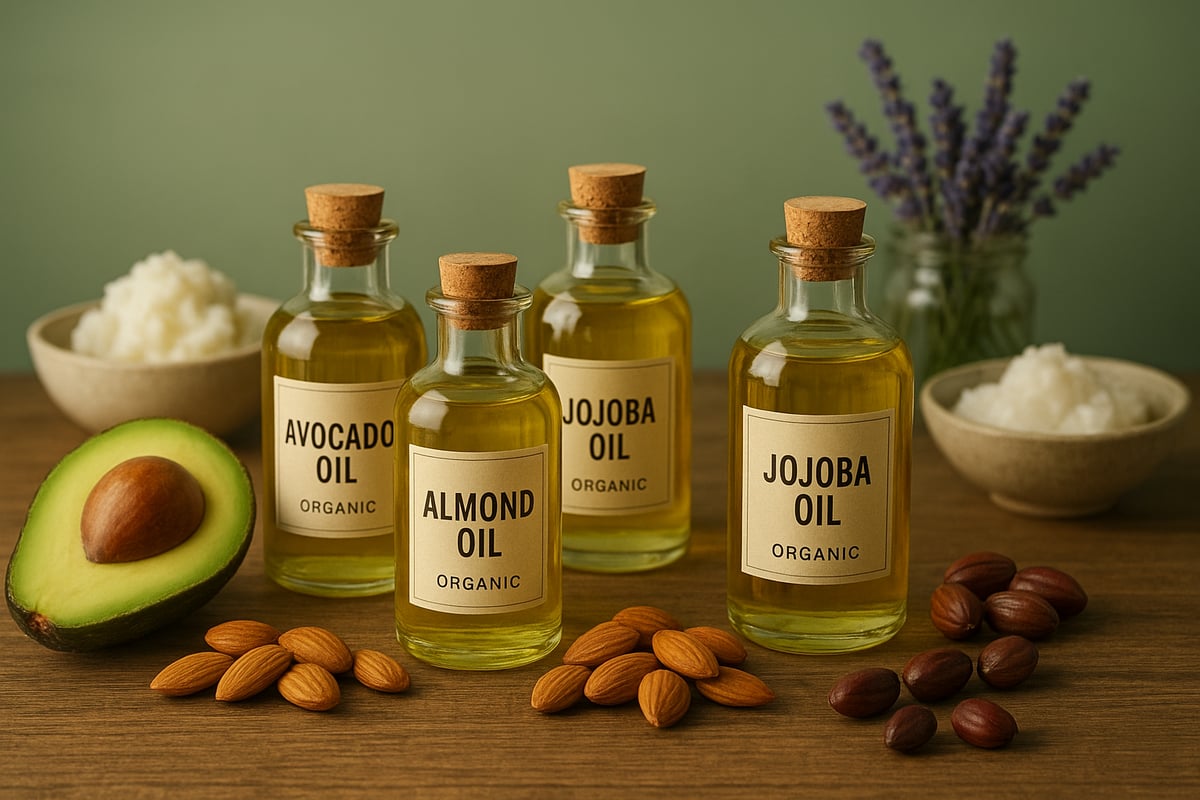
Vegetable oils form the foundation of every organic oils wholesale business. Popular choices include jojoba, castor, almond, avocado, argan, sunflower, and baobab oil. Each of these oils has its own composition, scent, and area of application.
The distinction between cold-pressed and refined is crucial. Cold-pressed oils retain more nutrients and natural aromas, while refined oils are more neutral and have a longer shelf life. For an in-depth explanation of this difference and its importance for the organic oils wholesale trade, read the article Difference between cold-pressed vs. refined oil.
Nutritional value and cosmetic benefits vary. Avocado oil is rich in vitamin E and unsaturated fatty acids, perfect for hair care and as a healthy cooking oil. Jojoba and almond oils are popular in skin care due to their moisturizing and soothing effects. Baobab oil is gaining ground because of its unique antioxidants.
Top 5 best-selling organic oils in 2025:
| Rank | Oil | Application |
|---|---|---|
| 1 | Jojoba | Cosmetics, skin |
| 2 | Avocado | Nutrition, hair |
| 3 | Almond | Skin, massage |
| 4 | Castor | Eyelashes, hair |
| 5 | Argan | Skin, hair |
The right selection of vegetable oils in the organic oils wholesale business determines distinctiveness and customer satisfaction.
Essential oils: functions and market demand
Essential oils are indispensable in the organic oils wholesale sector, especially for aromatherapy, perfumery, and natural cleaners. Highly demanded oils include lavender, eucalyptus, rosemary, jasmine, and cypress. Each has its own scent profile and effect.
Purity and origin are decisive for quality. Customers expect essential oils to be 100% pure, without synthetic additives. Lavender oil is a bestseller in the wellness industry thanks to its calming properties, while eucalyptus oil is popular in natural cleaners.
The organic oils wholesaler responds to trends by choosing transparent origins and laboratory-tested batches. Brands and spas look for unique blends and exclusive oils to distinguish themselves in a saturated market.
The range of essential oils within the organic oils wholesale sector offers opportunities for private labels, wellness concepts, and sustainable house brands. This keeps the offering relevant and future-proof.
Special fats and waxes
In addition to liquid oils, special fats and waxes are indispensable in the organic oils wholesale business. Think of organic shea butter, coconut oil, and beeswax. These ingredients are widely used in natural cosmetics, personal care products, and even in the food sector.
Shea butter is known for its intensely nourishing effect on the skin and is popular with both cosmetic brands and wellness companies. Organic coconut oil is versatile: from skin and hair care to cooking. Beeswax offers a natural alternative to synthetic binders in creams and balms.
The demand for these fats and waxes is growing rapidly, partly due to the trend towards vegan, cruelty-free, and environmentally friendly formulas. The organic oils wholesaler that responds to this need strengthens its position as a sustainable partner within the industry.
Quality, Certification, and Sustainability in Wholesale
Quality and reliability form the backbone of every successful organic oils wholesaler. In a market where consumers are becoming increasingly discerning, it is essential not only to meet legal requirements but also to invest in transparency, control, and sustainability. Below, we explain how certification, quality control, and ethical sourcing come together within the organic oils wholesale sector.
Organic certifications and labels
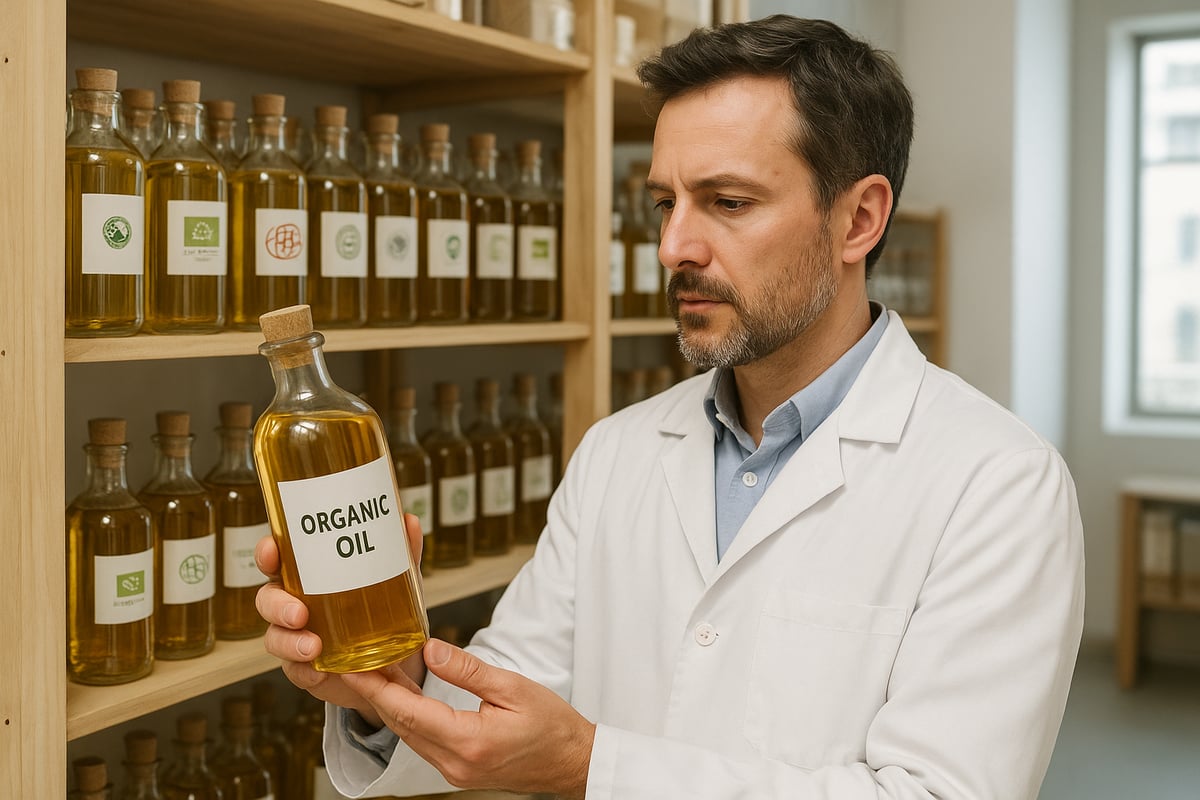
Certifications are the proof of authenticity in the organic oils wholesale business. The main labels are EU Organic, Ecocert, and USDA Organic. Each certification sets strict requirements for cultivation, processing, storage, and distribution. Only oil producers who meet these standards may carry the organic label.
Transparency is crucial. Traceability within the supply chain means that every step – from farmer to wholesaler – is fully documented. This increases trust among buyers and opens the door to international export. Especially the European market sets high standards for organic certification, which offers growth opportunities.
A good organic oils wholesaler works exclusively with certified producers. This prevents import issues and ensures product quality. Want to know more about specific certifications and quality requirements? Check the detailed information on organic certification and quality.
Quality control and product safety
Strict quality control is indispensable for the organic oils wholesaler. Every batch of oil undergoes purity analyses and batch controls. Only in this way can it be guaranteed that the product is free from pesticides, heavy metals, and allergens.
Providing laboratory reports is now standard practice. More than 90% of B2B customers explicitly request them. Transparency towards buyers is enhanced by complete documentation and clear product information.
A practical example: through structural batch controls and rapid recalls in case of deviations, an organic oils wholesaler reduces the risk of reputational damage and claims. This ensures continuity and strengthens trust among partners.
In addition, it is essential to invest in knowledge of regulations and product safety. This is how wholesalers distinguish themselves in a competitive market.
Sustainability and ethical sourcing
Sustainability is a decisive factor for every modern organic oils wholesaler. Supply chain responsibility means investing in fair trade, collaborating with local farmers, and protecting the environment. Fair trade initiatives offer farmers a fair price, while eco-friendly cultivation methods contribute to biodiversity.
The demand for cruelty-free and vegan products is growing rapidly. An organic oils wholesaler that responds to this increases its appeal to conscious customers. CO2 compensation programs and sustainable packaging solutions are also gaining ground.
By choosing ethically responsible sourcing and transparent supply chains, a wholesaler builds a future-proof reputation. This way, sustainability becomes not just a marketing tool but an integral part of the business model.
Purchasing Strategy and Selection of the Right Wholesaler
The right purchasing strategy determines the success of your organic oils wholesale business. In a fast-growing market, it is essential to critically evaluate suppliers and partners. By selecting carefully, you build a solid foundation for sustainable growth and customer satisfaction.
Important selection criteria for wholesalers
Choosing the right organic oils wholesaler requires a systematic approach. Compare providers based on the following criteria:
| Selection criterion | Why is it important? |
|---|---|
| Product range | Specialist in a wide range of oils |
| Pricing structure | Transparent bulk prices and volume discounts |
| Delivery reliability | Consistent stock and fast delivery |
| Certification & sustainability | EU Organic, Ecocert, fair trade, vegan |
| Customer reviews | High rating, for example 9.3/10 |
| Logistics & export | Worldwide deliveries and documentation |
Pay close attention to the breadth of the assortment. A specialized organic oils wholesaler offers both vegetable and essential oils, with complete quality documentation.
Look further into delivery reliability, as stock shortages can harm your own delivery performance. Transparency in prices and terms prevents surprises when purchasing on a large scale. Check customer reviews, as they provide valuable insight into service and aftersales. This way, you lay a solid foundation for your organic oils wholesale business.
Oliemeesters: Your Partner in Organic Oils Wholesale
Oliemeesters stands out as a specialized organic oils wholesaler. This company offers only 100% pure, certified oils, including jojoba, castor, lavender, shea butter, and coconut oil. Through global sourcing and strict quality controls, you are assured of transparency and top quality.
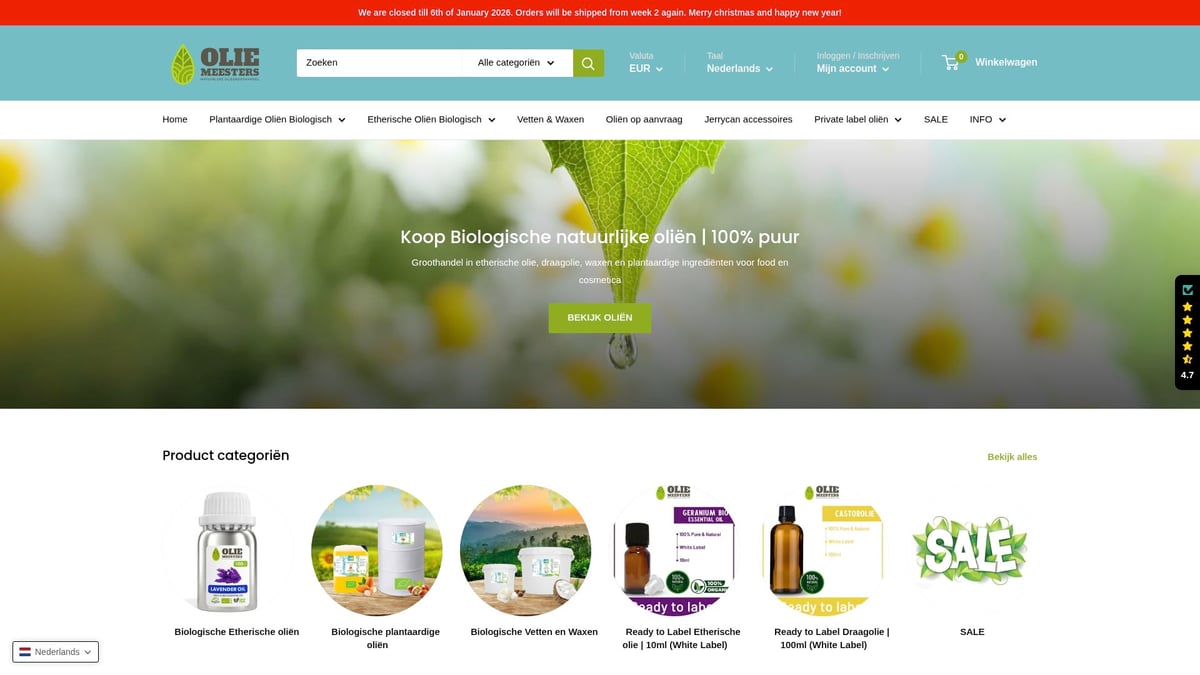
What makes this wholesaler unique? You benefit from private label and white label solutions, fast delivery, customization, and extensive documentation. This is essential for companies seeking flexibility and reliability.
The customer base consists of cosmetic brands, food producers, wellness companies, and retailers. With its sustainable and cruelty-free range, Oliemeesters responds to the growing demand for ethical products. If you want to explore the essential oils segment, also read the Wholesale Essential Oils Guide for current insights and tips.
Choosing a partner like Oliemeesters means investing in quality, service, and market knowledge. This contributes to the success of your organic oils wholesale business.
Practical tips for negotiating and purchasing
Successful purchasing from an organic oils wholesaler requires preparation and sharpness. Always request samples and recent laboratory reports. This way, you can assess purity and quality yourself.
Pay attention to minimum order quantities, as too large volumes can lead to overstock. Check delivery times, especially for international shipments. A clear agreement on return rights and complaint handling prevents disputes later on.
Compare different wholesalers not only on price but also on customer service and aftersales. A good relationship with your organic oils wholesaler ensures more flexibility and a reliable supply chain.
Laws and Regulations for Organic Oils in 2026
The regulations for the organic oils wholesale business will change significantly in 2026. European and international rules will become stricter, affecting import, export, and product safety. For entrepreneurs in the organic oils wholesale sector, it is essential to be fully aware of current requirements and changes. This way, they can reduce risks and seize opportunities within this dynamic sector.
European and international regulations
The organic oils wholesale business faces complex European legislation. The EU organic regulation sets strict requirements for the production, processing, and import of organic oils. Mandatory certification, full traceability, and clear labeling are basic conditions for market access. Residue limits for pesticides are also strictly monitored.
From 2026, the costs for import controls on organic products will be passed on to businesses. This means that every organic oils wholesaler must account for additional administrative and financial burdens. Read more about this development in the article Import controls on organic products passed on to businesses from 2026.
Internationally, there are differences between EU Organic and USDA Organic. After Brexit, separate rules also apply for trade with the United Kingdom. It is therefore wise to check the specific requirements for each export market.
Import, export, and customs procedures
For a successful organic oils wholesale business, correct import and export are crucial. Every product must have the proper certificates, up-to-date analyses, and proof of origin. Without these documents, there is a risk of delays or even refusal at customs.
Customs duties and import taxes vary by country and product. Especially with imports from Asia or Africa, mistakes are often made with incomplete documentation or incorrect certification. This can lead to fines or loss of organic status. Always ensure a detailed check of all required documents before a shipment departs.
Engaging a customs specialist in a timely manner can prevent many problems. This keeps the organic oils wholesaler compliant and allows customers to benefit from fast processing times.
Liability and product safety
The organic oils wholesaler carries a great responsibility towards buyers. Legally, they are required to deliver safe and traceable products. Insufficient risk management can lead to recalls or liability in case of damage.
It is important to establish clear contracts with suppliers and take out product liability insurance. Regular internal audits and quality controls are necessary to ensure the organic oils wholesaler always meets the highest standards. This provides security for both the wholesaler and the end customer.
Innovations and Trends in Organic Oils Wholesale
The organic oils wholesale market is undergoing a transformation driven by technological innovation, sustainability initiatives, and changing market demand. Innovation and trends will determine the success of wholesalers in this sector in 2026. Companies must adapt to new products, digitalization, and stricter sustainability requirements.
New product developments and blends
The demand for innovation within the organic oils wholesale market is growing. Custom blends and functional blends, such as mixtures focused on hair or skincare, are gaining ground. Brands are increasingly choosing private label blends to differentiate themselves in niche markets.
Packaging also plays a major role: recyclable, refillable, and plastic-free solutions are becoming increasingly popular. Some wholesalers offer fully compostable packaging, catering to the eco-conscious consumer.
These innovations strengthen the competitiveness of the organic oils wholesale market and offer growth opportunities in rapidly changing markets.
Digitalization and e-commerce in wholesale
Digitalization is a driving force behind efficiency in the organic oils wholesale market. Online B2B platforms make it easier to automate orders and reach new customers worldwide.
Real-time inventory management and track & trace systems increase transparency and reliability in the supply chain. Thanks to e-commerce, wholesalers can respond faster to trends and customer needs.
Automation of order processes and digital product information also save time and reduce errors. This enables companies in the organic oils wholesale business to optimize their services.
Sustainability trends and social impact
Sustainability is central to the organic oils wholesale business. Wholesalers invest in CO2 reduction, the circular economy, and transparent supply chains. Collaborations with local farmers and fair trade initiatives are becoming increasingly important to meet the growing demand for ethically responsible products.
According to the report on sustainable production and consumption in the fats and oils sector, making the supply chain more sustainable is essential for long-term success.
This focus on sustainability makes the organic oils wholesale business more attractive to conscious buyers and enhances the reputation of companies.
Expectations for the future
The future of the organic oils wholesale business looks promising. Forecasts indicate continued growth until 2030, partly due to new export markets and increasing global demand for organic products.
Consumers are demanding higher standards of transparency, quality, and sustainability. Wholesalers who proactively respond to this will strengthen their competitive position.
The ability to innovate, digitize, and operate sustainably is becoming a decisive success factor in the organic oils wholesale business.
Successfully Starting and Growing as an Organic Oils Wholesaler
Setting up and expanding a successful organic oils wholesale business requires knowledge, strategy, and perseverance. Whether you are just starting or looking to grow, a structured approach is essential. Below you will find practical tools and insights for every step of the process.
Step-by-step plan for (starting) wholesalers
A good start for your organic oils wholesale business begins with thorough market research and defining your target audience. Analyze demand in various segments, such as food, cosmetics, and wellness. Select reliable suppliers with certified products and set clear requirements for quality and traceability.
Organize your logistics and inventory management carefully so you can quickly respond to customer requests. Pay attention to regulations and certification, as these determine your access to international markets. For more practical tips, visit Organic Business for up-to-date information on legislation and subsidies.
Marketing and sales strategies
In the organic oils wholesale market, positioning yourself as a sustainable and reliable partner is very important. Invest in branding and storytelling to communicate your unique value to customers. Use customer reviews and case studies to build trust with potential clients.
Focus on education and knowledge sharing, for example through webinars or whitepapers. Offer customized solutions and fast service so you stand out in a competitive market. Also stay alert to trends and respond with innovative products or packaging.
Pitfalls and success factors
Many starting entrepreneurs in the organic oils wholesale market underestimate the importance of flexible purchasing and risk management. Price volatility, changing regulations, and inventory issues can hinder your growth. Stay alert to contract terms, delivery reliability, and quality control.
Success stories show that innovation, adaptability, and customer focus are decisive. Build long-term relationships with suppliers and customers, and dare to invest in sustainability and digitalization. Learn from common mistakes to strengthen your own strategy.
Practical tools and resources
Use checklists for quality control and purchasing to streamline your processes. Consult lists of certifying bodies and industry associations for current requirements and networking opportunities. Online platforms and B2B marketplaces help you find new suppliers and customers.
For an overview of relevant regulations, subsidy options, and practical support, Organic Entrepreneurship is a valuable resource. With the right tools and knowledge, you lay a solid foundation for a successful organic oils wholesale business.
Now that you know everything about the opportunities and challenges in the organic oils wholesale market for 2026, you understand how important it is to work with a reliable partner who guarantees quality, sustainability, and fast delivery. Whether you want to start or expand your range, at Oliemeesters you will find 100% pure, certified oils with full transparency. We are ready to support you with customized solutions and a carefully selected offer that meets your needs. Want to benefit immediately from fast deliveries and top-quality products? Order now - fast delivery within 1-5 days