

How can your company optimally respond to the growing demand for organic oils in 2026? The market for organic oils wholesale is growing rapidly, driven by consumers increasingly choosing sustainability and health. Companies that respond to this benefit from new opportunities and a competitive edge.
This article offers a complete overview of the wholesale market for organic oils. You will discover current purchasing strategies, the main trends for 2026, and practical tips for success.
What can you expect?
- An overview of types of organic oils
- Explanation of purchasing processes and quality criteria
- Market developments and trends through 2026
- Strategic tips for successful wholesale purchasing
This way, you are prepared for the future of organic oil purchasing.
What are organic oils? Definition, types, and applications
Organic oils have become indispensable in modern industries. But what truly makes an oil organic, and why are they so important in the organic oils wholesale market? In this section, we dive into the core of organic oils: their definition, the different types, applications, benefits, and market developments through 2026.
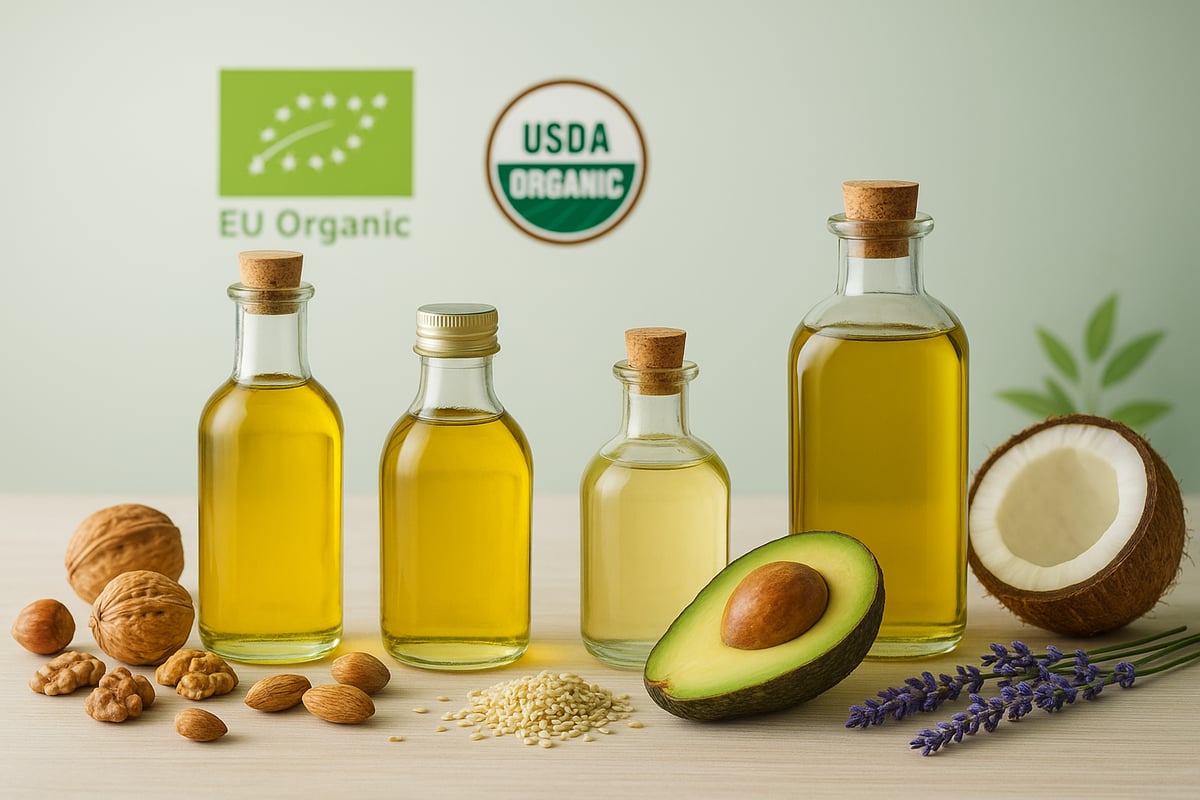
Definition of organic oils
Organic oils are vegetable or essential oils derived from controlled organic farming. They differ from conventional oils because they are produced without synthetic pesticides, chemical fertilizers, or genetically modified organisms.
Strict legal criteria apply within organic oils wholesale. In the EU, products must comply with the European organic regulation and are often certified by organizations such as SKAL, Ecocert, or USDA Organic. Origin and traceability are essential: every step from seed to bottle must be demonstrably organic, which increases trust among buyers and consumers.
Main types of organic oils in the wholesale market
The selection within organic oils wholesale is broad and diverse. The most common vegetable oils are jojoba, argan, almond, avocado, coconut, sunflower, and flaxseed oil. Essential oils such as lavender, eucalyptus, tea tree, rosemary, and lemon are popular in aromatherapy and cosmetics. Additionally, fats and waxes like shea butter and beeswax are important for the industry.
These oils find their way into a variety of applications: from skincare to food products and wellness items. For a complete overview of the range and purchasing options, you can visit all organic natural oils.
Applications and Sectors
Within organic oils wholesale, the main markets are the cosmetics industry, food industry, and wellness sector. In skincare and haircare, organic oils form the basis of many creams, serums, and masks. Cold-pressed oils are used as dietary supplements or as ingredients in healthy snacks.
Wellness companies and spas use essential oils for aromatherapy and relaxation. Well-known brands like Weleda, Dr. Hauschka, and Rituals use organic oils in their products, responding to the demand for natural and transparent ingredients.
Benefits of Organic Oils
The benefits of organic oils wholesale are significant for both health and the environment. Organic oils are free from pesticides and contain a high level of active plant compounds, making them suitable for sensitive skin and conscious consumers.
Sustainability plays a central role: organic farming leads to less soil depletion and a lower CO2 footprint. Consumers increasingly demand pure, natural ingredients and are guided by certifications and transparency, which further stimulates market growth.
Market Data and Growth Figures (2024-2026)
The organic oils wholesale market shows strong growth worldwide. According to recent figures, the market in Europe is growing at an average annual growth rate (CAGR) of about 8 to 10 percent. Especially the Netherlands, Belgium, and Germany see rising demand due to the popularity of organic food and natural cosmetics.
Regulations and changing consumer behavior act as catalysts for this growth. New legislation promotes transparency and quality, while companies respond to the demand for sustainable, organic products. Forecasts indicate that the market will continue to grow through 2026.
Purchasing Organic Oils: Step-by-Step Guide for Wholesalers
Successfully purchasing organic oils wholesale requires a structured approach. Each of the six steps below forms an essential link for an efficient, reliable, and profitable wholesale strategy. By following these steps, you minimize risks and maximize your market opportunities in 2026.
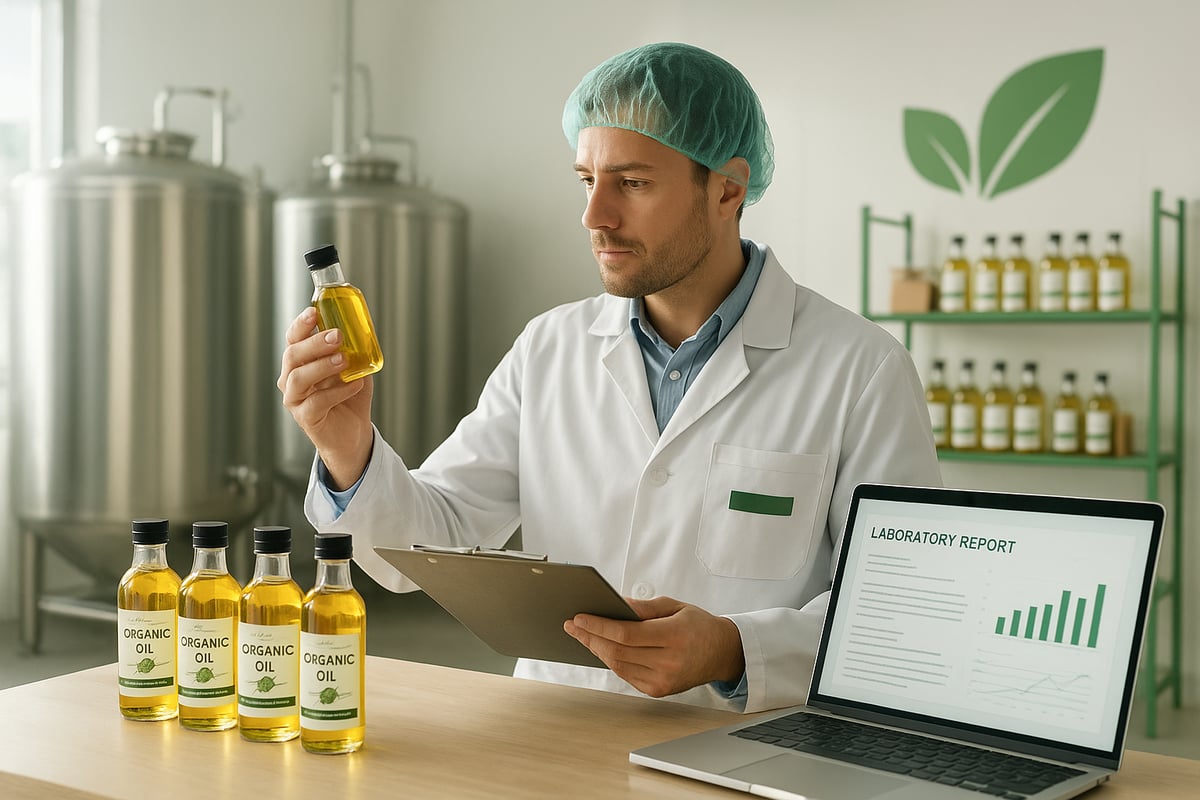
Step 1: Market and Supplier Analysis
The first step in organic oils wholesale is identifying reliable producers and wholesalers worldwide. Pay attention to certifications such as SKAL, EU Organic, or Ecocert for guaranteed organic quality. Compare suppliers on price, volumes, delivery terms, and transparency.
Use platforms, trade fairs, and networks to find potential partners. For example, visit a organic essential oils wholesaler for an up-to-date overview of the offerings. Always ask for references and check their track record in the industry.
Create a shortlist of suppliers who meet your requirements for traceability, certification, and consistency.
Step 2: Quality Control and Documentation
Quality control is indispensable in organic oils wholesale. Request laboratory reports (GC/MS), batch codes, MSDS, and allergen lists for every batch. Actively check purity by evaluating samples for scent, color, and consistency.
Be sure to distinguish between pure and diluted oils. Request additional analyses if in doubt. Document all received certificates and results centrally so you can always prove compliance with legal requirements and customer expectations.
Strict incoming inspection prevents complaints and protects your reputation as a wholesaler.
Step 3: Contracting and Negotiating
Negotiation is essential in organic oils wholesale. Make clear agreements about pricing structures: bulk prices, volume discounts, and any white label rates. Establish delivery terms such as lead times, minimum order quantities, and return policies.
Use examples of successful negotiations as a reference for your own process. Always ask for written confirmation of all agreements to avoid misunderstandings.
Make sure to stay flexible in your contracts so you can respond to fluctuations in volumes or prices due to market developments.
Step 4: Logistics and Storage
Efficient logistics is crucial for organic oils wholesale. Store oils in suitable materials like glass, stainless steel, or certified bioplastic, and protect them from light and temperature fluctuations. Consider shelf life and batch rotation.
For bulk transport, food-safe, sealed packaging is required. Ensure traceable shipments so you always know where a batch is located. Choose sustainable logistics solutions, such as biodegradable packaging and CO2-neutral transport whenever possible.
A good logistics process minimizes loss and ensures product quality.
Step 5: Product Development and Labeling
When thinking about organic oils wholesale, consider private label and white label options for customers who want to launch their own brand. Pay attention to labeling: always include ingredients, origin, and expiration date according to applicable legislation.
Collaborate with specialized partners to develop unique blends or innovative packaging. A successful private label launch requires clear communication about specifications and quality standards.
Ensure all product information is transparent and up-to-date so customers immediately trust your offering.
Step 6: Customer Communication and Aftersales
Transparency towards customers is the cornerstone of organic oils wholesale. Actively inform about origin, certification, and quality controls. Provide technical data sheets and product information on request, and respond quickly to inquiries.
Provide personal support with product selection and application. Invest in aftersales by proactively requesting feedback and handling complaints appropriately. An example: a customer-focused B2B service with tailored advice ensures long-term relationships and positive word-of-mouth.
Strong customer communication forms the foundation for repeat purchases and sustainable growth.
Oliemeesters: Specialist in Organic Wholesale Oils
Oliemeesters is recognized as the specialist for organic oils wholesale in the Netherlands and beyond. This company supplies only 100% pure, certified organic vegetable and essential oils to wholesalers, brands, and manufacturers. The wide range includes jojoba, argan, almond, avocado, and coconut oils, suitable for both cosmetic and food use.
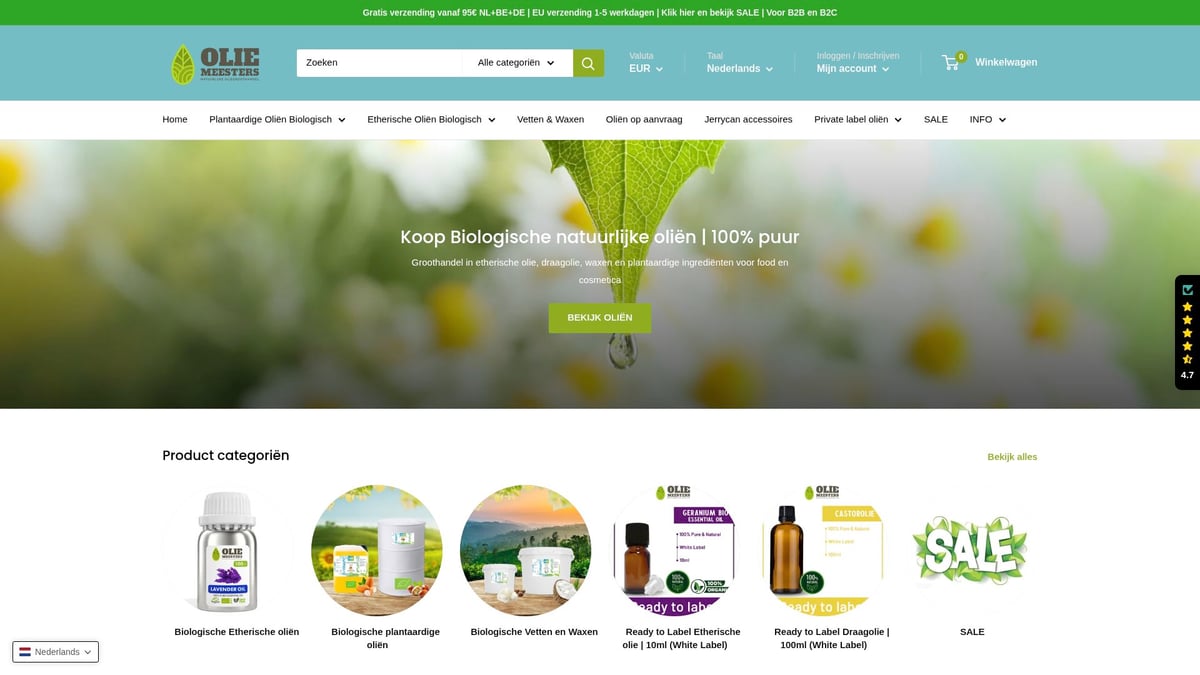
For buyers looking for a reliable partner for carrier oil and base oil wholesale, Oliemeesters offers transparent product information, clear certifications, and fast delivery within 1 to 5 working days in the EU. Each product comes with extensive documentation, such as laboratory reports and origin information.
Brands and manufacturers benefit from flexible private label and white label solutions. This allows them to easily launch their own line of organic oils, including professional labeling and support with product development. This makes it possible to quickly respond to changing market trends and offer unique products.
Oliemeesters serves diverse customer groups such as cosmetics manufacturers, wellness companies, food producers, and retailers. Thanks to volume discounts, transparent pricing, and free shipping from €95 in the Netherlands, Belgium, and Germany, organic oils wholesale remains attractive and competitive.
The excellent customer rating, based on high scores for service, quality, and reliability, highlights why more companies are choosing Oliemeesters as their purchasing partner for 2026. With a focus on sustainability, certification, and customized solutions, Oliemeesters is a solid choice for successful organic wholesale purchasing.
Quality criteria and certification for organic oils
Ensuring quality and reliability is essential at organic oils wholesale. Certification, purity, packaging, and transparency all play an important role in the success of your purchasing strategy. Below you will find the main quality criteria for organic oils in the wholesale market.
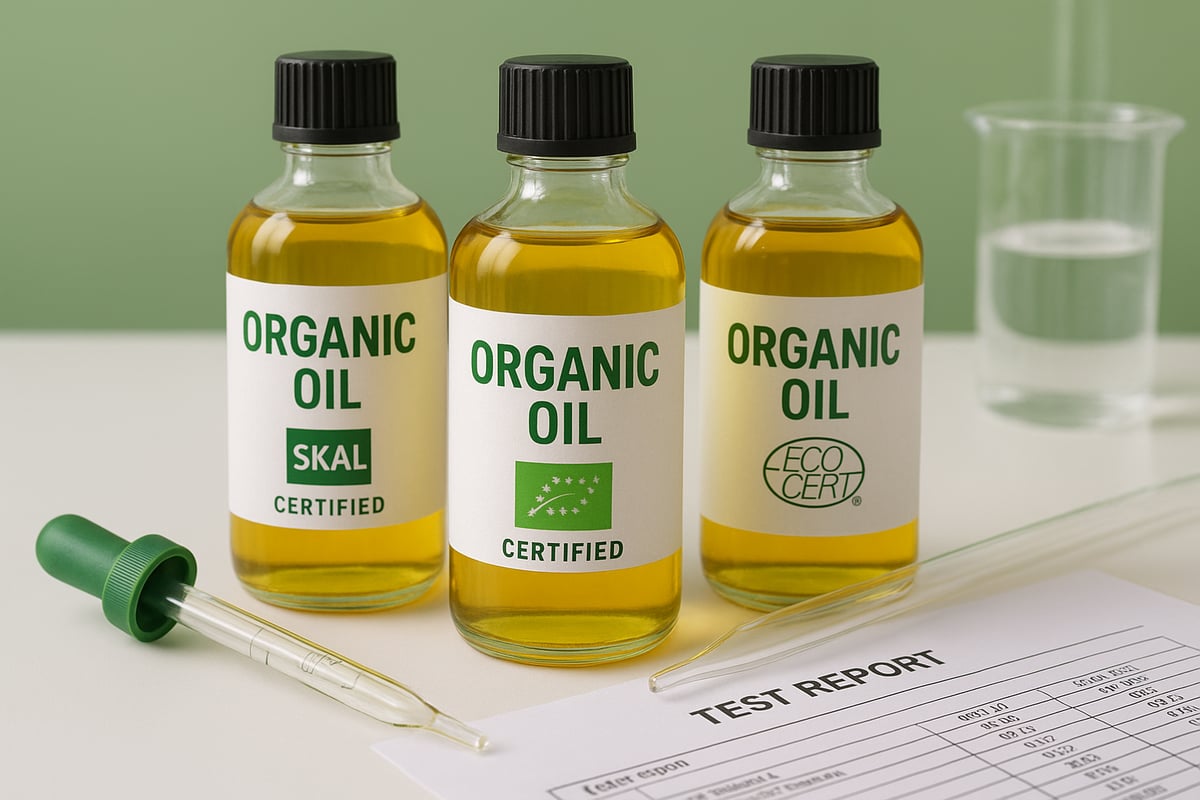
Importance of certification and labels
Certification forms the basis of trust in organic oils wholesale. Important labels are SKAL, EU Organic, Ecocert, and USDA Organic. These labels ensure oils meet strict standards for organic production and traceability.
Without proper certification, an oil may not be sold as organic in the EU. The process includes inspection of cultivation, processing, and storage. Want to know more? See the Skal Biocontrol: Organic label for products for exact requirements and rules.
Purity and composition control
Purity is crucial at organic oils wholesale. Suppliers must provide laboratory analyses, such as GC/MS reports and batch codes, to confirm the composition. This checks for contaminants, pesticides, and heavy metals.
A batch of oil can be rejected if the results fall outside the standards. Regular testing and documentation help ensure consistency and safety within wholesale.
Packaging, shelf life, and storage
At organic oils wholesale, the right packaging is essential. Glass, stainless steel, or bioplastic protect against light and oxidation and extend shelf life. Air, light, and temperature affect the quality of organic oils.
For wholesalers, storage in a cool, dark place is recommended. Proper packaging prevents quality loss and contributes to a longer shelf life of the product.
Transparency and product information
Transparency in the supply chain is a must for organic oils wholesale. Suppliers must provide complete ingredient lists, origin information, and laboratory reports (such as COA and MSDS). This increases trust among business customers.
Companies increasingly choose suppliers who offer maximum transparency. This allows them to communicate responsibly to their own customers and comply with legal requirements.
Common purchasing mistakes and how to avoid them
Common mistakes in organic oils wholesale include misunderstandings about certifications and insufficient batch control. Sometimes claims are not substantiated, or too little attention is paid to quality documentation.
Avoid problems by working only with certified suppliers, checking every batch, and carefully keeping documentation. This minimizes risks when buying organic oils in bulk.
Market developments and trends in organic oils until 2026
The market for organic oils wholesale is developing rapidly. Significant growth is expected in the coming years, both in demand and supply. Worldwide consumption of organic oils is rising, driven by more conscious consumers and stricter regulations. According to the OECD-FAO oilseed harvest forecast 2020-2030, oilseed production is increasing annually, especially in Africa and South America. A good example is the rise of organic coconut oil from the Philippines, which responds to the need for sustainable alternatives. These developments make organic oils wholesale a strategically interesting market for wholesalers.
Growth in demand and supply
The demand for organic oils wholesale is steadily increasing in Europe and worldwide. New cultivation areas, such as parts of Africa and South America, are supplying more and more certified organic oils. This expands the supply and makes it possible to meet the growing demand from the food and cosmetics industries. The market for organic coconut oil from the Philippines shows that diversification in cultivation areas can spread risks. According to the OECD-FAO oilseed harvest forecast 2020-2030, further production growth is expected between 2024 and 2026, offering extra opportunities for organic oils wholesale.
Innovation in products and applications
Innovation is an important engine within organic oils wholesale. New blends of vegetable and essential oils are finding their way to the market, often with multifunctional applications in skincare, nutrition, and aromatherapy. Niche oils such as baobab, moringa, and hemp seed are gaining popularity due to their unique properties. Additionally, innovative products like multifunctional serums and nourishing cosmetics are increasingly being developed. In aromatherapy, new blends are emerging that address specific wellness needs. Wholesalers who respond to these trends position themselves as pioneers in organic oils wholesale.
Sustainability and ethics as driving forces
Sustainability is no longer a trend but a requirement within organic oils wholesale. Consumers demand transparency, fair trade, and climate-friendly production. Certifications like Fair for Life and B Corp are gaining ground. Brands focusing on zero waste and renewable packaging stand out from the crowd. BioNederland's ambition to grow the organic market by 30% in 2025, as described in Organic grows towards 30% market growth in 2025, underscores the importance of sustainable growth. Those who invest sustainably in organic oils wholesale build long-term success.
Digitalization and traceability
Digitalization offers opportunities for transparency in organic oils wholesale. Blockchain technology makes it possible to make the entire supply chain transparent. This allows wholesalers to easily demonstrate where and how their oils were produced. Certificates and product information are increasingly shared digitally. QR codes on packaging provide direct access to origin information, laboratory reports, and certificates. This development increases customer trust and speeds up the purchasing process. By investing in digitalization, companies within organic oils wholesale remain competitive and future-proof.
Price trends and market dynamics
Prices in organic oils wholesale are influenced by harvests, climate change, and geopolitical developments. Fluctuations in supply can lead to price increases or decreases. Comparisons between 2023 and 2026 show that prices for jojoba, argan, and lavender oil can vary significantly. Flexible purchasing and signing long-term contracts are becoming increasingly important to limit price risks. Transparency in price structure and comparing suppliers help wholesalers stay competitive. By applying smart purchasing strategies, companies in organic oils wholesale can protect their margins.
Legislation and regulations 2026
New EU regulations for organic products directly impact organic oils wholesale. Stricter requirements regarding labeling, claims, and imports lead to a higher quality standard. Wholesalers must regularly update their product specifications to comply with current legislation. Examples include stricter traceability requirements and mandatory origin labeling. These developments demand continuous knowledge and flexibility. By staying up-to-date with regulations, companies within organic oils wholesale can strengthen their market position and minimize risks.
Successful organic purchasing: Practical tips & strategies
Successfully purchasing organic oils requires a well-thought-out strategy. The market for organic oils wholesale is dynamic, making it essential to stay flexible and actively respond to opportunities and risks. Below you will find practical tips and strategies to elevate your purchasing process.
Strategies for risk diversification
Risk diversification is crucial within organic oils wholesale. Always work with multiple suppliers from different countries to reduce supply risks. By organizing inventory management smartly and considering contract purchasing, your company remains agile amid fluctuations in supply or price.
- Selecting multiple suppliers
- Distributing inventory across locations
- Signing flexible contracts
An example: a distributor spread the purchase of jojoba oil across partners in South America and Africa and still maintained supply security during a poor harvest. This way, you avoid dependency and ensure continuity.
Collaboration with producers and cooperatives
Direct collaboration with farmers or cooperatives not only results in better prices within organic oils wholesale but also increases transparency and control over quality. By building long-term relationships, you gain access to fair, certified raw materials and work together on quality improvement.
A practical example: a wholesaler who partnered with a Moroccan argan farmers' cooperative received priority during shortages and influence over production standards. This strengthens your market position and increases customer trust.
Private label and branding opportunities
The demand for private label products is growing within organic oils wholesale. By collaborating with a specialized natural fats and waxes wholesaler, you can quickly respond to trends and differentiate your own brand.
- White label: quickly expand your assortment
- Private label: unique positioning
- Bulk purchasing: economies of scale and lower costs
A successful brand launch starts with a distinctive story and reliable quality. Choose partners who offer customized solutions and have experience in the B2B market.
Marketing and customer communication
Transparency is essential in organic oils wholesale. Tell the story behind each product, from origin to production, and highlight sustainable and healthy benefits. Effective communication, both B2B and B2C, builds trust and loyalty.
Use storytelling in your marketing to strengthen the unique appeal of your organic oils. Actively share product information, certifications, and customer cases via your website, newsletters, and social media.
Responding to future trends
Stay alert to new oils, applications, and regulations within organic oils wholesale. Follow consumer trends, invest in knowledge and innovation, and adjust your assortment flexibly. This way, you remain competitive and relevant through 2026.
Monitor market signals, attend trade fairs, and maintain contact with producers and buyers. By continuously learning and innovating, your company stays a leader in the organic oils market.
Now that you know exactly what to look for when purchasing organic oils and which trends will shape the market until 2026, it's time to turn this knowledge into action. Whether you are a producer, retailer, or brand looking to tap into the growing demand for pure, sustainable ingredients, Oliemeesters offers a wide range of certified oils tailored to your business needs. We ensure transparency, quality, and fast delivery so you can respond flexibly to market developments. Want to benefit immediately from our reliable service and competitive terms? Order now fast delivery within 1-5 days