

The demand for buying oil in bulk is rising rapidly in 2026, driven by the focus on sustainability, cost savings, and consistent quality. More and more companies and individuals are looking for efficient ways to meet their oil needs responsibly and affordably.
This guide provides a complete overview for anyone considering buying oil in bulk. You will discover the benefits of bulk purchasing, learn which types of oil are available, what to watch for when selecting and buying, and how to store safely and efficiently. Additionally, you will get current market insights and practical steps for success.
The Benefits of Buying Oil in Bulk
More and more companies and individuals are choosing to buy oil in bulk. The advantages are convincing, especially regarding cost, sustainability, quality, and flexibility. Below is an overview of the four main benefits.
Cost Savings and Price Advantages
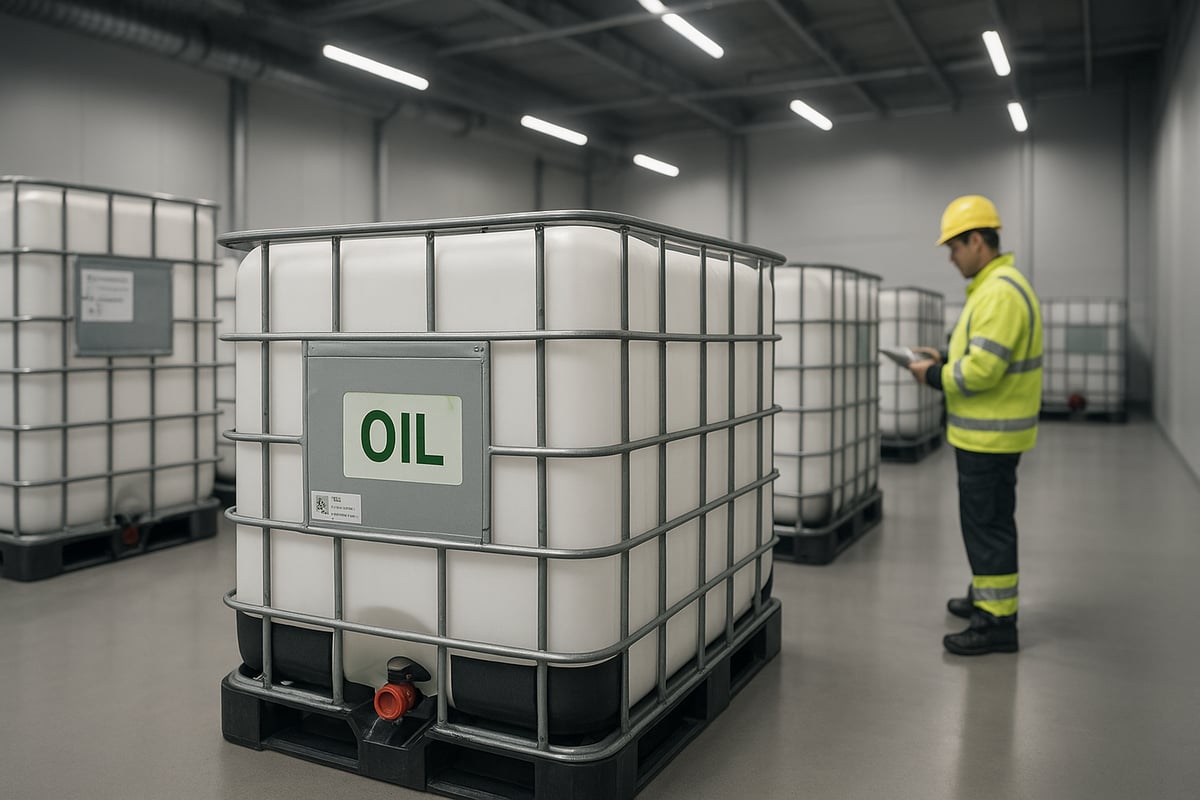
Buying oil in bulk results in significant cost savings. By purchasing larger quantities, you often pay a lower price per liter. For example: where a one-liter bottle of olive oil costs around €5 in the supermarket, the price can drop to €3.50 per liter when buying in bulk.
According to industry data, buying oil in bulk is on average 20 to 40% cheaper than individual small packages. This is not only due to economies of scale but also lower packaging and logistics costs. Especially companies with high oil usage benefit from these price advantages.
- Lower price per liter with larger volumes
- Lower expenses on packaging materials
- More efficient logistics and delivery
By purchasing smartly, more budget remains for other business goals.
Sustainability and Environmental Benefits
Choosing to buy oil in bulk directly contributes to sustainability. Large packaging generates much less packaging waste than small bottles. This means a significant reduction in plastic or other packaging materials.
Additionally, bulk transport results in fewer trips and lower CO2 emissions. For example, ordering one pallet of bulk oil instead of dozens of boxes of individual bottles saves tens of kilos of plastic and reduces freight traffic emissions.
- Less packaging waste per liter of oil
- Fewer transport movements needed
- Positive impact on your environmental goals
For organizations that prioritize sustainability, buying oil in bulk is a logical step.
Consistent Quality and Availability
Buying oil in bulk offers the assurance of consistent quality. Often, the oil is delivered from a single batch, preventing fluctuations in taste, aroma, or composition. This is especially important in the food industry and hospitality, where uniformity matters.
Moreover, the chance of delivery problems is smaller. By ordering larger quantities, you build a buffer and become less dependent on interim deliveries. Specific requirements can also be set for the oil, such as certain purity or fatty acid composition.
- One batch means fewer quality differences
- Less chance of shortages or delivery problems
- Possibility for customization or your own specifications
This keeps production running smoothly, without unwanted surprises.
Flexibility and Application Possibilities
Buying oil in bulk is suitable for a wide range of sectors. Think of the food industry, cosmetics, wellness centers, and even industrial applications. Large packages make it possible to switch quickly and efficiently between different uses.
Many suppliers also offer private label or white label options. This way, you can offer oil under your own brand. Examples of applications include soap makers, food service companies, and wellness practices.
- Suitable for various industries and applications
- Easy inventory management through large volumes
- Opportunity for private label for your own brand positioning
Want to know which oils are suitable for bulk purchase? Then check out the wholesale bulk list of vegetable and essential oils for an up-to-date overview.
Types of Oil You Can Buy in Bulk
The options for buying oil in bulk are very diverse. Depending on your industry and application, you can choose from different types of oil. Each type of oil has unique properties, benefits, and areas of use. Below you will find an overview of the main categories, so you can determine which bulk oil purchase best suits your needs.
Vegetable Oils
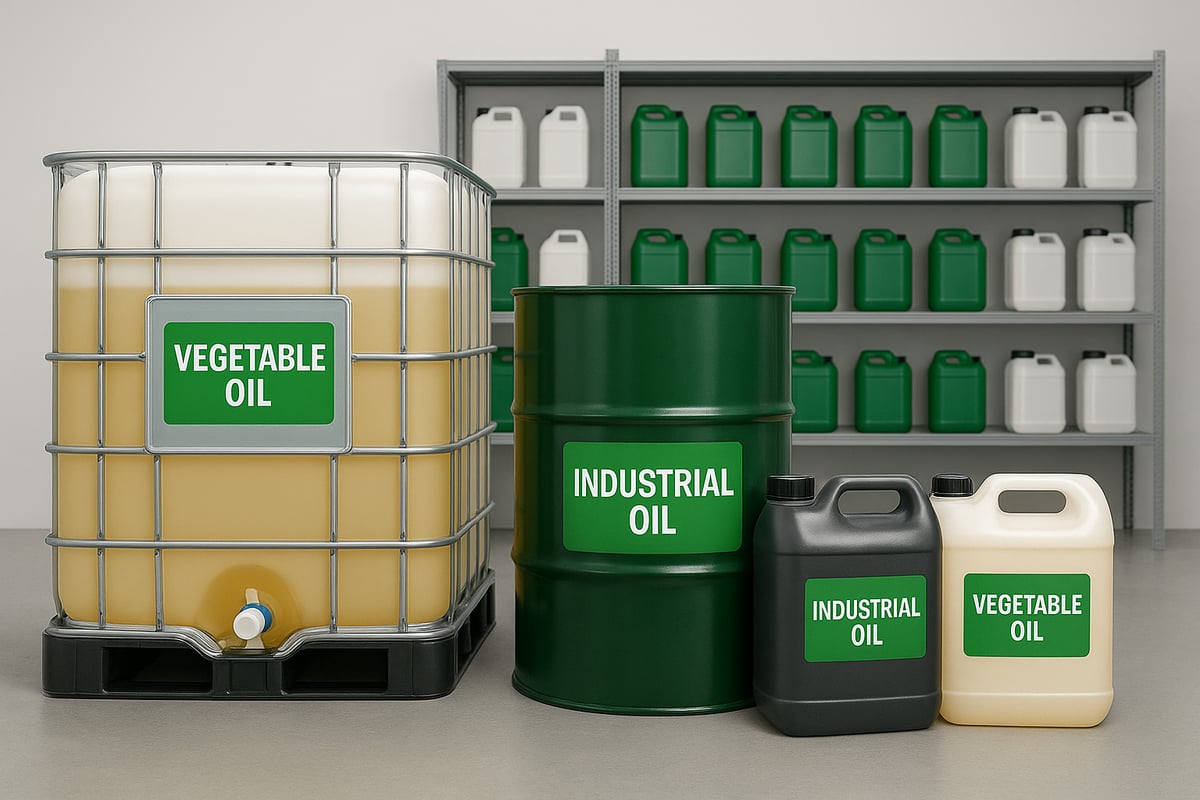
When buying oil in bulk, vegetable oils are the most popular within the food industry, cosmetics, and wellness. Think of sunflower oil, olive oil, coconut oil, avocado oil, and almond oil. These oils are suitable for both consumption and use in care products or soap.
If you choose to buy oil in bulk, you can often choose between cold-pressed, organic, or refined. Cold-pressed oils retain more nutrients, while refined oils have a more neutral character. Read more about the difference between cold-pressed and refined oil to make an informed choice.
Buying vegetable oil in bulk ensures a constant supply and quality, essential in professional kitchens and production environments.
Essential Oils
Essential oils are concentrated fragrances often bought in bulk for aromatherapy, cosmetics, or cleaning products. Popular varieties include lavender oil, eucalyptus oil, and tea tree oil.
Purity is crucial when buying oil in bulk because essential oils are applied directly to the skin or air. Always look for certifications that guarantee purity and origin. Buying large quantities of essential oil in bulk is efficient for wellness centers, spas, and producers of natural care products.
Various sectors increasingly choose to buy oil in bulk because of consistency and scalability.
Technical and Industrial Oils
You can also buy oil in bulk for technical applications. Think of lubricating oil, hydraulic oil, and cutting oil. These oils are widely used in industry, machine building, and engineering.
When buying oil in bulk for technical purposes, you need to pay attention to viscosity, purity, and specific requirements per machine. Buying industrial oil in bulk prevents production downtime and offers logistical advantages.
These oils are indispensable for companies that rely on continuously running machines and equipment.
Organic and Sustainable Oils
The trend toward sustainability is making organic oil in bulk increasingly popular. Organic oils come from controlled cultivation without pesticides or chemical fertilizers.
Examples include organic jojoba oil and argan oil, which are increasingly used in food and cosmetics. Buying certified oil in bulk contributes to environmentally friendly business practices and meets the growing demand from conscious consumers.
Companies consciously choose to buy oil in bulk to achieve their sustainability goals.
Specialty and Niche Oils
Besides the well-known types, there is a growing market for specialty oils. Think of baobab oil, camellia oil, and hemp oil. These niche oils are often used in premium cosmetics or innovative food products.
By buying oil in bulk in this category, producers can respond to unique trends and achieve higher margins. Buying niche oil in bulk is especially interesting for brands that want to stand out in a competitive market.
Choosing the right oil in bulk gives companies flexibility and an edge in their sector.
What to Watch for When Buying Oil in Bulk
Buying oil in bulk involves more than just price and quantity. The right choice starts with critical considerations, from quality standards to logistics. Below you’ll find the key selection criteria that businesses and individuals must not ignore in 2026.

Quality and Certifications
Quality is central when buying oil in bulk. Always look for quality marks such as organic, ISO, or GMP. These certificates provide assurance about origin and production process. Check if the supplier holds an EU Organic label or Ecocert, especially if sustainability is important to your company.
Essential questions are: Is the oil traceable back to the source? Are recent analysis certificates available? For more information on quality standards and certifications, it’s best to consult the page Quality and Certifications for Oil.
Note that certification not only delivers environmental benefits but also lowers barriers for export or food safety.
Supplier Selection and Reliability
When buying oil in bulk, a reliable supplier is indispensable. Check the reputation through customer reviews and references. Look at the supplier’s experience in your sector and ask for transparency in the production and delivery process.
A good supplier provides insight into the entire chain. Ask for proof of traceability to be sure the oil is responsibly produced. Always choose suppliers who communicate openly about their processes and products.
It pays off to build a long-term partnership so you can count on continuity and flexibility with changing needs.
Price Comparison and Cost Structure
Those considering buying oil in bulk should look beyond the price per liter. Watch out for hidden costs such as transport, packaging, and minimum order quantities. Request multiple quotes and compare not only the total price but also the terms.
There can be price differences between individual liters and bulk deliveries. Sometimes an offer seems advantageous, but extra costs negate the benefit. Make an overview of all cost items:
- Transport and delivery costs
- Packaging costs (drum, IBC, jerrycan)
- Storage and handling costs
Use a table to clearly compare prices and terms from different suppliers.
Packaging and Logistics
Packaging plays a crucial role when buying oil in bulk. Consider the type of packaging: jerrycans, steel drums, or IBC containers. Each option has specific advantages and disadvantages regarding shelf life, safety, and transport.
Pay attention to proper storage instructions. Some oils require a cool, dark space, while others are more sensitive to oxygen. Ask the supplier about the best logistical solutions for your situation.
Good logistics reduce waste and extend the shelf life of the oil. Always choose packaging types that suit your consumption and storage capacity.
Laws and Regulations
When buying oil in bulk, you must always consider laws and regulations. HACCP requirements apply to edible oils, and CPNP registrations are mandatory for cosmetics. For imports from abroad, customs formalities and documents such as MSDS or analysis certificates are necessary.
Check if the supplier is familiar with these requirements and can provide the necessary documentation. This prevents delays or legal issues.
For companies in the food or cosmetics sector, it is essential to strictly comply with all regulations. This ensures safety and quality for end users.
Step-by-Step Plan: Buying Oil in Bulk in 2026
Buying oil in bulk requires a structured approach. This step-by-step plan guides you through the entire process, from determining needs to evaluation. This ensures quality, efficiency, and cost savings when buying oil in bulk.
Step 1: Determine Your Needs
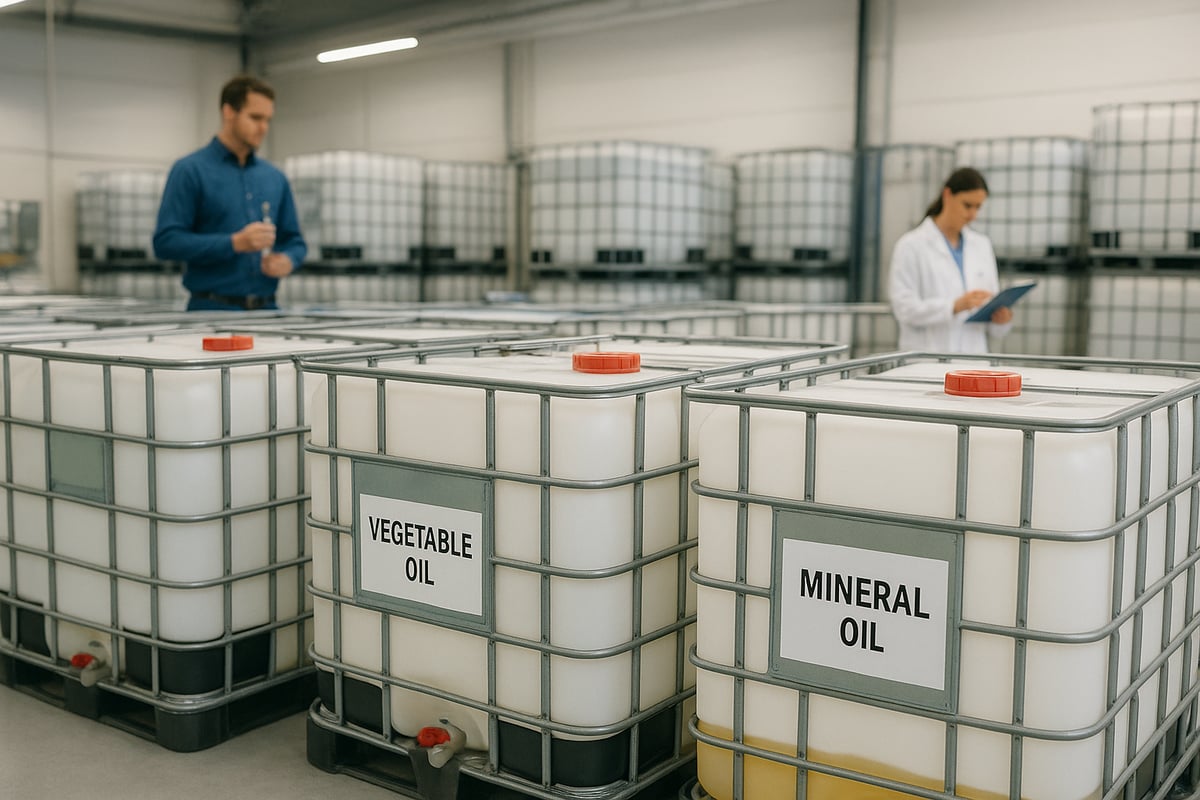
The first step in buying oil in bulk is to clearly map out your needs. Analyze current and expected consumption within your organization. Determine which type of oil is needed and in what quantity.
Consult with the production or purchasing department to inventory all applications. Also, determine the quality requirements and certifications the oil must meet. This prevents unnecessary costs or misunderstandings during the process.
Good preparation ensures that buying oil in bulk aligns with your business objectives.
Step 2: Search and Compare Suppliers
Now that you know what you need, you can search for suppliers more effectively. Use industry platforms, professional networks, and online marketplaces to make a selection. Request samples from various suppliers and compare their quotes.
When buying oil in bulk, pay attention not only to the price but also to delivery terms and service. Check if the supplier can flexibly respond to your needs and if there are opportunities for long-term cooperation.
Create an overview of the best options and carefully weigh price, quality, and reliability.
Step 3: Check Quality and Certificates
Quality is essential when buying oil in bulk. Always request analysis certificates and verify that the oil has the appropriate certifications, such as organic or ISO certification.
Test the received samples for smell, color, and composition. Also check for possible allergens and product purity. Reliable suppliers provide transparent information about their production process.
By integrating these checks into your purchasing process, you prevent problems and ensure the quality of your bulk oil.
Step 4: Negotiate Price and Contract
When buying oil in bulk, it is wise to negotiate price and terms. Discuss volume discounts for larger quantities and agree on delivery frequency.
Set clear agreements on payment, delivery, and any return options. Put all pricing agreements in writing to avoid misunderstandings.
Clear contracts provide certainty and smooth long-term cooperation.
Step 5: Arrange Transport and Storage
Logistics is a crucial link when buying oil in bulk. Choose packaging that fits your storage capacity, such as jerrycans, barrels, or IBC containers. Match the transport method to the type of oil and the distance to your location.
Also ensure safe storage according to applicable guidelines. Consider shelf life and temperature to prevent quality loss. More information about delivery and return conditions can be found at Delivery and Returns of Bulk Oil.
Good logistics minimize risks and optimize your inventory management.
Step 6: Evaluation and Optimization
After the first delivery, it is important to evaluate the process of buying oil in bulk. Monitor consumption and satisfaction within your organization. Assess the collaboration with the supplier regarding quality, service, and delivery reliability.
Adjust order quantities or internal processes if necessary for a more efficient workflow. This way, you continuously improve and get the most out of buying oil in bulk.
Storage, Shelf Life, and Safety of Bulk Oil
Safely and efficiently storing large quantities of oil requires specific considerations. Those considering buying oil in bulk must take into account storage conditions, shelf life, legal regulations, and sustainable waste management.
Storage Conditions and Facilities
For buying oil in bulk, it is essential to maintain the right storage conditions. Always store oil in a cool, dark, and dry place to prevent oxidation and quality loss. Use special storage rooms or warehouses with controlled temperature and humidity for this purpose.
IBC containers with taps are popular due to their large capacity and practical use. They protect the contents from light and air, which benefits shelf life. Jerrycans or steel drums are also suitable, provided they are well sealed and clean.
A well-organized storage area with clear labeling and sufficient ventilation prevents mix-ups and minimizes risks. This way, buying oil in bulk ensures maximum efficiency and safety.
Shelf Life and Quality Preservation
The shelf life of oil varies by type and depends heavily on storage conditions. Oxygen, light, and high temperatures accelerate spoilage. Cold-pressed oils are more sensitive than refined oils and generally have a shorter shelf life.
On average, many vegetable oils have a shelf life of 12 to 24 months if stored properly. Essential oils can last longer, while technical oils are often more stable. Always use airtight packaging and close containers immediately after use.
By focusing on quality preservation and optimal storage when buying oil in bulk, the oil stays fresher and more usable for longer.
Safety Regulations and Legislation
When buying oil in bulk, compliance with safety regulations and legislation is crucial. Bulk containers must have correct labels with product information, batch number, and expiration date. Additionally, certain oils, such as essential oils, are subject to extra requirements based on ADR regulations for hazardous materials.
Provide clear storage instructions, fire extinguishing equipment, and personal protective equipment where necessary. Additional rules apply for food or cosmetic oils, such as HACCP or CPNP registration. Keep all relevant documentation, such as analysis certificates and safety data sheets, on hand.
This approach ensures that buying oil in bulk guarantees not only quality but also safety and compliance.
Waste Management and Sustainability
Responsible disposal of empty bulk containers is part of sustainable business practices. Many containers, such as IBCs and jerrycans, are suitable for recycling or reuse. Rinse containers thoroughly and deliver them to recognized collection points.
Choose sustainable alternatives where possible, such as bioplastic packaging or reusable systems. This way, buying oil in bulk reduces environmental impact and contributes to the circular economy.
Market Trends And Innovations In Bulk Oil For 2026
The market for buying oil in bulk is changing rapidly. Companies and individuals want to purchase more efficiently, sustainably, and cost-effectively. Technological advances, changing regulations, and new consumption patterns are creating notable trends. Below are the key developments and innovations for 2026.
Growth And Developments In The Bulk Oil Market
The market for buying oil in bulk continues to grow, driven by economies of scale and increasing demand for sustainable solutions. Recent market analyses show that oil supply will grow faster than demand until 2026. This causes a shift in market balance and more competition among suppliers.
According to Oil Outlook 2026: supply grows faster than demand, supply is increasing annually while demand is leveling off. This offers opportunities for price-conscious buyers and increases the availability of various oils in bulk. Companies can plan more efficiently and benefit from a wider product selection.
Sustainability And Organic Oil
Sustainability is central when buying oil in bulk. The demand for organic, fair trade, and environmentally friendly oils is steadily growing. More and more companies want to reduce their ecological footprint and therefore choose certified organic oil.
This trend is reinforced by stricter regulations and increasing pressure from consumers. By choosing to buy sustainable oil in bulk, companies can achieve their CSR goals. Additionally, the share of organic oil in the total market has increased by a few percentage points per year in recent years, highlighting its relevance for 2026.
Digitalization And Transparency
Digitalization plays a major role in buying oil in bulk. More and more online platforms are emerging where buyers can compare prices, stocks, and certifications in real time. Blockchain technology makes it possible to fully trace the origin of oil, significantly improving food safety and transparency.
Digital certification and automatic documentation ensure a more efficient purchasing process. This gives companies greater control over quality and compliance. Transparency in the supply chain becomes a distinguishing factor when buying oil in bulk, especially for international trade.
Innovations In Packaging And Logistics
In packaging, innovative solutions are emerging for buying oil in bulk. Think of reusable IBC containers, bioplastics, and smart packaging that extends shelf life. These developments reduce packaging waste and optimize the logistics chain.
Logistical innovations, such as CO2-neutral transport and automated storage, make it possible to operate more sustainably and efficiently. Companies that invest in these innovations when buying oil in bulk benefit from cost savings and a lower environmental impact.
Price Developments And Risk Management
Price developments are crucial when buying oil in bulk. Oil prices are influenced by geopolitical factors, climate change, and the market balance between supply and demand. Analysts expect that in 2026, an oversupply could lead to lower prices, as discussed in the article IEA predicts oil price drop in 2026 due to oversupply.
Companies can reduce risks through fixed price agreements, inventory management, and diversifying suppliers. By closely following market trends, buyers can make the most of favorable price developments when purchasing oil in bulk.
Future Challenges And Opportunities
The future of buying oil in bulk brings both challenges and opportunities. Climate change can cause shortages of certain oils, while new markets and product innovations emerge. The circular economy and sustainability offer plenty of opportunities for companies that look ahead and respond flexibly to market trends.
Now that you know the benefits and considerations involved in buying oil in bulk, you probably realize how important it is to choose a reliable supplier who guarantees quality, sustainability, and flexibility. Whether you want to save on costs and packaging as a business or are looking for pure, certified oils for your personal use, Oliemeesters is the right place for you. We offer a wide range of 100% organic and cruelty-free vegetable and essential oils, tailored to your needs. Discover the ease and speed of ordering: Order now fast delivery within 1 5 days