

The world of argan oil wholesale is evolving rapidly in 2026. Are you ready to grow along and strengthen your position?
In this practical guide, you’ll discover everything you need to know to succeed in the argan oil wholesale market, whether you’re a beginner or an experienced professional.
We cover the latest market trends, quality criteria, purchasing strategies, logistics, regulations, branding, and profitable tips.
See opportunities? Get inspired by success stories and unique insights. Take the first step today toward a future-proof argan oil wholesale business.
The Argan Oil Market in 2026: Trends and Opportunities
The argan oil wholesale market is on the brink of major changes in 2026. Worldwide demand is growing rapidly, new applications are being discovered, and consumer trends are shifting. In this section, we explore the main developments, opportunities, and challenges for entrepreneurs aiming to succeed in the argan oil wholesale market.
Growth and demand worldwide
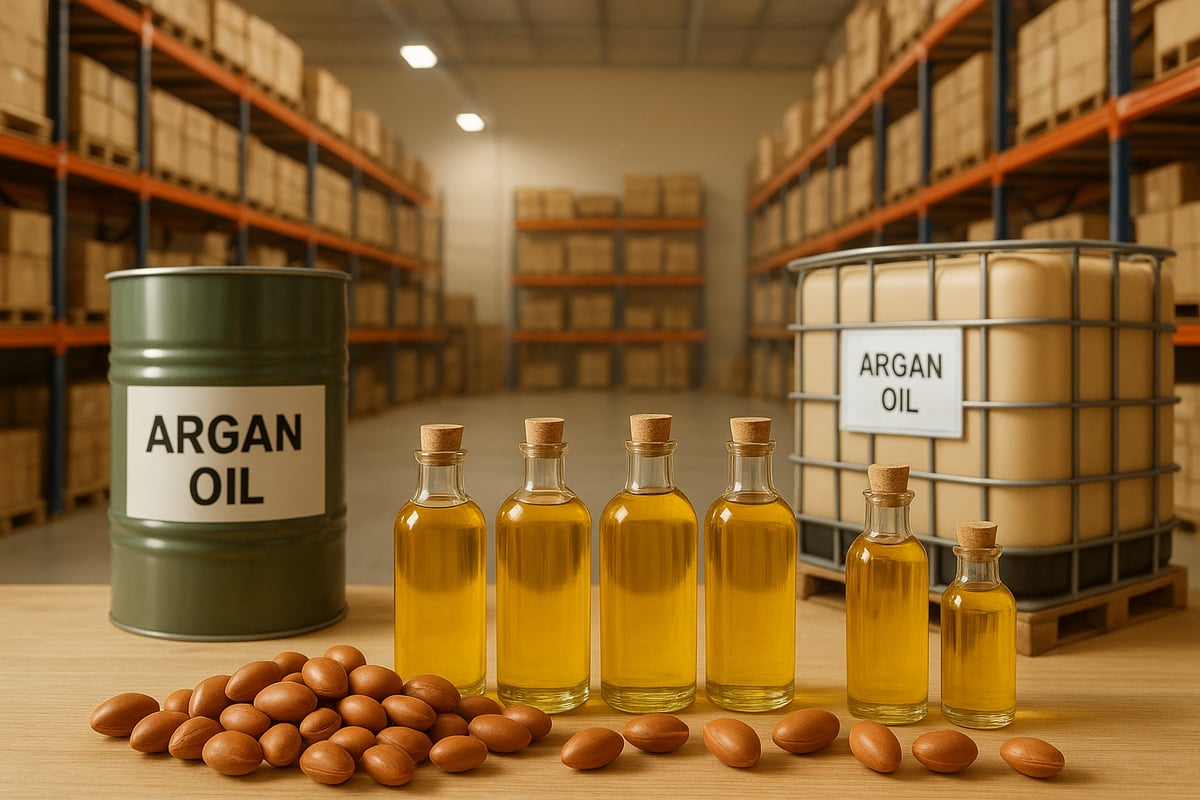
The global argan oil wholesale market is experiencing strong annual growth. According to recent market analyses, the market is expected to reach a value of over 793 million dollars by 2032, supported by rising demand for organic beauty and wellness products. Argan oil market growth and trends confirm this trend and show that the popularity of argan oil in cosmetics, food, and wellness continues to increase.
Niche markets such as vegan and organic products are gaining ground, especially in Europe and North America. Sustainability and ethical sourcing are decisive for consumers. Innovations like multifunctional oils and clean beauty formulas create new applications. Regional differences are clearly visible: European markets focus on organic certification, while Asian countries mainly emphasize premium beauty products.
For entrepreneurs in the argan oil wholesale market, responding to these trends is essential to remain competitive.
Key players and competition analysis
The argan oil wholesale market is dominated by both large international suppliers and local Moroccan cooperatives. Major players stand out through economies of scale, international distribution, and extensive certification. Local cooperatives offer unique products with a strong focus on quality and sustainability.
B2B platforms and marketplaces like Alibaba and specialized wholesalers make it easier to purchase globally. Price structures vary widely depending on certification, volume, and origin. Margins average 10 to 20 percent, with higher profits for exclusive and certified products.
Competitors mainly differentiate themselves through quality, service, and transparency. Companies with a clear positioning on sustainability or premium segments gain market share. For the argan oil wholesale business, it is crucial to invest in reliable partners and certification.
Future growth opportunities and risks
For the argan oil wholesale business, opportunities lie in new export markets such as Asia and South America, where demand is rapidly increasing. Digitalization and e-commerce make international trade more accessible than ever. Companies that automate their processes and offer flexible logistics benefit from this growth.
There are also risks. Scarcity of raw materials, price fluctuations, and climate change can threaten continuity. Regulations around food safety and cosmetics are becoming stricter, placing extra demands on documentation and traceability. Entrepreneurs who invest in certification and transparency minimize these risks.
Successful companies anticipate trends such as clean beauty, organic production, and direct cooperation with cooperatives. For the argan oil wholesale business, it is important to remain flexible and respond quickly to changing market needs.
Sustainability and ethics as a differentiating factor
Sustainability is the new business card in the argan oil wholesale market. Fairtrade and collaboration with Moroccan cooperatives ensure fair prices and social impact. Transparency in the supply chain, from the argan tree to the final product, is seen as a must by both customers and regulators.
Consumers increasingly choose environmentally friendly production and expect proof of sustainable initiatives. Statistics show that certified, sustainable argan oil gains a larger market share. Successful brands communicate openly about their production process and involve local communities.
For the argan oil wholesale business, sustainability not only offers a competitive advantage but also strengthens positioning as a reliable and ethically responsible partner. By investing in certification and long-term relationships with local producers, you build a future-proof wholesale business.
Quality and Certification: What Should You Watch For?
Quality forms the backbone of every successful argan oil wholesale business. Especially in 2026, as the market becomes increasingly demanding, it is essential to stand out based on pure products and reliable certification. Those who want to grow cannot avoid strict quality standards. What should you pay attention to in order to meet customer expectations and regulations?
What determines the quality of argan oil?
The quality of argan oil is determined by several factors. First of all, it matters whether the oil is organic or refined. Organic oil is produced without chemical agents and retains more active ingredients. Cold-pressed extraction is crucial because it preserves the natural profile and nutrients of the oil.
Origin plays a major role. Oil from specific regions in Morocco is known for its rich texture and golden color. The production process, from harvest to pressing, influences scent, color, and purity. Laboratory tests are indispensable for every argan oil wholesale business. They guarantee the absence of contamination and ensure consistency.
Quality differences are visible: pure oil is clear, lightly nutty in scent, and has a silky texture. Statistics show that complaints often arise from blending or poor storage. By choosing certified suppliers and testing strictly, you minimize risks.
Essential Certifications and Documentation
Certifications are indispensable for an argan oil wholesale business. Think organic, vegan, fair trade, COSMOS, and Ecocert. These quality marks increase business customer trust and are often required for export. Certification affects price but also opens doors to premium markets.
Documentation is a must. A batch of argan oil must always be accompanied by a Product Data Sheet (PDS), Safety Data Sheet (SDS), and Certificate of Analysis (CoA). These documents confirm composition, safety, and origin. According to market data, more than 60% of B2B trade is now certified.
Want to learn more about the standards and requirements? Then check out the detailed explanation on quality control and certification of argan oil for concrete examples and practical tips.
Common Mistakes in Quality Control
Quality control is an ongoing process within every argan oil wholesale business. Yet mistakes are regularly made. For example, the origin of the oil is sometimes insufficiently verified, causing blends or adulterations to go undetected in time. Failing to perform batch control and traceability can lead to major risks during recalls.
Storage and transport are also crucial. Oil stored too warm or in direct sunlight quickly loses quality. Real-world incidents show that improper storage can lead to rejection of entire batches. Always ensure a structured receiving inspection, verifying scent, color, and documentation.
Preventing these mistakes requires clear procedures, regular audits, and staff training. Only then will the reputation of your argan oil wholesale business remain intact.
Oliemeesters: Example of a Certified Wholesale Supplier
Oliemeesters is a leading player in the argan oil wholesale market and is known for its strict quality guarantees. They work exclusively with established suppliers in Morocco and ensure full traceability from tree to bottle. Each batch is thoroughly tested and comes with all necessary documentation.
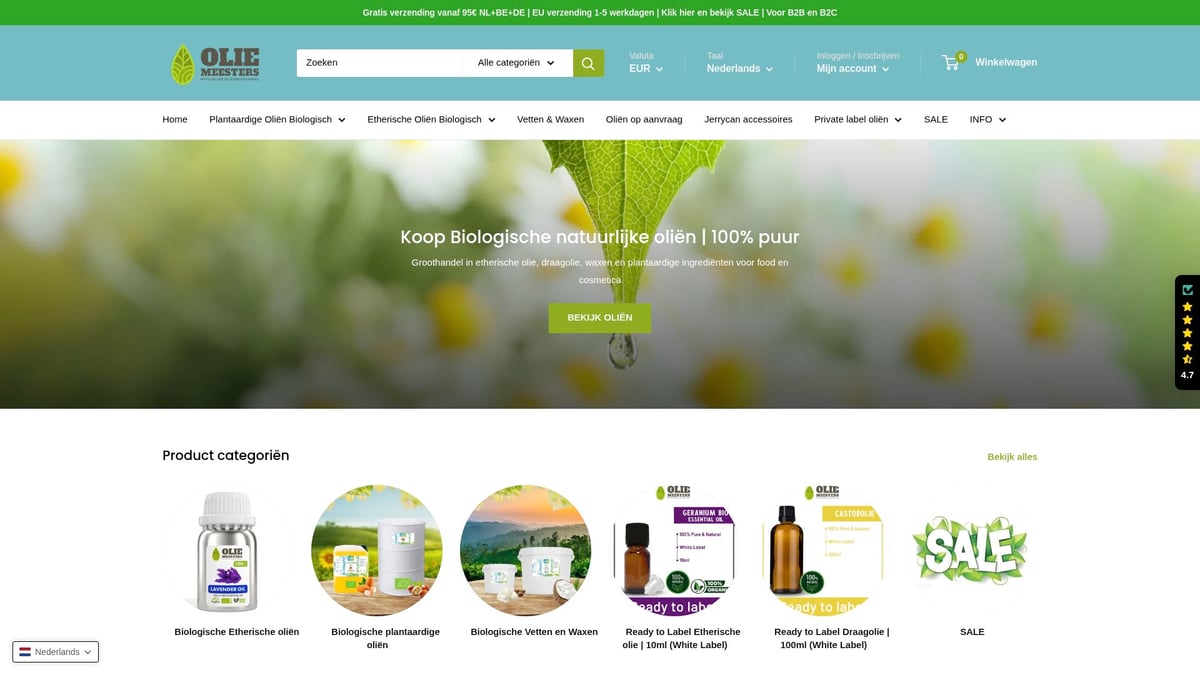
For the cosmetics and food industries, Oliemeesters offers both B2B and private label solutions. Customers appreciate the fast delivery, multilingual support, and transparent communication. Positive customer reviews underline the reliability of their service.
This case study shows that a professional argan oil wholesaler is only successful when quality, certification, and service come together. This way, you optimally meet market demands.
Procurement Strategy: From Source to Warehouse
A successful argan oil wholesale business starts with a strong procurement strategy. Every part, from source selection to warehouse management, determines the difference between profit and loss. By purchasing smartly, you minimize risks, ensure quality, and create growth opportunities.

Selecting reliable suppliers
Selecting reliable suppliers is the first step for every argan oil wholesaler. Certified producers in Morocco are essential for consistent quality. These suppliers often work with local women's cooperatives, which not only contributes to ethical sourcing but also to transparency.
Pay attention to the following when selecting:
- Certifications (organic, fair trade)
- References from existing customers
- Extensive documentation and laboratory testing
An on-site audit provides extra assurance. Always ask for batch numbers and traceability. Successful collaborations arise from clear communication and agreements. Statistics show that wholesalers who invest in long-term relationships with producers experience fewer quality issues.
Want insight into the full bulk assortment and reliable suppliers? Then check the Wholesale Bulk List of Vegetable Oils for current options within the argan oil wholesale trade.
Price agreements and contract negotiations
The price structure in the argan oil wholesale trade consists of raw material costs, logistics, and margins. Clear contracts are essential to avoid misunderstandings. Document agreements on quality, delivery times, and payment terms.
Some tips for contract negotiations:
- Use tiered pricing for larger purchases
- Agree on flexible pricing during market fluctuations
- Check delivery terms and incoterms
Price volatility is a real risk in the sector. By signing long-term contracts, you limit the impact of fluctuations. On average, margins in the argan oil wholesale trade range between 10 and 25 percent, depending on the segment and volume.
Logistics, Storage, and Inventory Management
Well-organized logistics are crucial for any argan oil wholesale business. Argan oil stays freshest when stored in dark, cool spaces. Bulk is often delivered in jerrycans, IBCs, or steel drums, depending on the order size.
Important points of attention:
- Choose logistics partners experienced in vegetable oils
- Consider seasonal influences on availability
- Maintain a minimum stock to guarantee delivery reliability
Inventory management requires insight into turnover rate and customer demand. Fast delivery is an important success factor, especially for international customers. Smart inventory management prevents spoilage and shrinkage, directly contributing to the profitability of your argan oil wholesale business.
Quality control upon receipt
Every shipment arriving at the argan oil wholesale business deserves a thorough quality check. Always inspect scent, color, purity, and accompanying documentation. Use standard test protocols and record findings.
Pay extra attention to:
- Deviations in color or scent
- Incomplete certificates or missing batch information
- Damage to packaging
If a batch is rejected, ensure a clear return process. In the industry, the rejection rate averages around 3 to 5 percent. By strictly inspecting upon receipt, you prevent problems during resale and strengthen the reputation of your argan oil wholesale business.
Laws and regulations for argan oil wholesale
Success in the argan oil wholesale business is strongly linked to knowledge of laws and regulations. Whether you are just starting or have been active for years, compliance with all rules is essential for reliability and growth. In this section, you will read what wholesalers need to pay attention to, from European requirements to insurance.

European and international regulations
The argan oil wholesale business faces strict European and international regulations. For cosmetics, the EU Cosmetics Regulation and REACH apply, while for food products, EFSA guidelines and labeling requirements are central.
Traceability is mandatory: every batch of argan oil must be traceable from tree to bottle. Non-compliance can lead to heavy fines and reputational damage. IFRA standards are important for fragrances, and Ecocert or COSMOS for organic claims.
Regional differences exist: exporting to the US or Asia requires additional documentation. Always make sure you know the regulations per market so your argan oil wholesale business can operate smoothly.
Import and export procedures
When importing from Morocco, the argan oil wholesale business deals with customs, import duties, and VAT. Often, a preferential trade agreement applies, resulting in lower import charges. However, correct HS codes and origin documents are required.
Common mistakes are incomplete customs documents or incorrect product classification. This can lead to delays or extra costs. Statistics show that 20% of shipments in this sector experience delays due to administrative errors.
Ensure clear planning and consult with logistics partners. This keeps the supply chain of your argan oil wholesale business efficient and compliant.
Product safety and allergens
Safety comes first in the argan oil wholesale business. Mandatory documentation such as SDS (safety data sheet), PDS (product specification), and CoA (certificate of analysis) must always be available. These documents ensure that allergens and risks are clear to buyers.
Incomplete or missing information can lead to recalls or warnings. A practical overview of these obligations can be found at Documentation: PDS, SDS, and CoA for wholesale.
Test products regularly and communicate transparently about possible allergens. This protects customers and strengthens trust in your argan oil wholesale business.
Liability and insurance
The argan oil wholesale business involves legal risks, especially in B2B sales. Product liability is regulated by law: in case of damage caused by a defective product, the wholesaler can be held liable.
Examples of damage claims in the sector show that even small mistakes can have major consequences. A good product liability insurance is therefore indispensable.
Take preventive measures, such as strict quality control and clear contracts with suppliers and buyers. This way, you limit risks and build a reliable argan oil wholesale business.
Branding, Positioning, and Private Label Opportunities
Strong branding is indispensable for success in the argan oil wholesale business. In a market where quality and reliability are central, a distinctive brand identity helps build long-term customer relationships and clearly position your offering. In this section, we discuss how you as an argan oil wholesaler can excel with branding, private label opportunities, unique positioning, and effective marketing strategies.
Successful branding in the argan oil market
Branding is also essential for the argan oil wholesale business. Customers prefer suppliers with a clear story and recognizable look. Think of brands that emphasize their Moroccan origin or position themselves as sustainable and transparent.
Strong brands use storytelling, for example by highlighting the production process and collaboration with local cooperatives. Statistics show that more than 60% of B2B customers consider brand preferences in their purchasing decisions. A professional appearance, consistent communication, and high-quality packaging make the difference.
Private label: step-by-step plan and benefits
Private label offers huge opportunities for the argan oil wholesale business. With a solid step-by-step plan – from selecting high-quality oil, designing labels to choosing packaging – retailers, salons, and webshops can stand out with their own brand.
Benefits include higher margins, more customer loyalty, and flexibility in assortment. Successful private label launches show that personalization and quality go hand in hand. Learn more about private label essential oils services for a flying start in the market.
Positioning: standing out from competitors
How do you position your argan oil wholesale business as sustainable, innovative, or premium? Unique propositions like organic, vegan, or locally produced appeal to new target groups.
Consider partnering with certified cooperatives or offering exclusive blends. Tips for long-term customer relationships include transparency, flexibility, and thinking along with the customer. Statistics show that companies with clear positioning achieve 30% higher customer loyalty.
Marketing and sales strategies
Effective marketing determines the success of your argan oil wholesale business. Use trade fairs, online platforms, and B2B marketplaces to become visible to new customers. Collaborations with influencers or partners strengthen your reach.
Examples of successful campaigns include storytelling via social media and offering sample packages. Focus on lead generation and customer retention so you not only attract new customers but also keep them long-term.
Practical success factors for argan oil wholesalers
Success in the argan oil wholesale business is not just about competitive prices or large volume. To truly excel in 2026, you must invest in customer focus, digitization, international growth, and continuous innovation. These success factors together form the foundation for a future-proof argan oil wholesale business.
Customer service and aftersales
Excellent customer service is one of the key success factors for any argan oil wholesaler. Customers expect fast, clear communication and expert advice, especially regarding product quality or deliveries.
Frequently asked questions concern certifications, origin, and uses of argan oil. Professional handling of complaints and returns increases trust and ensures repeat customers. Statistics show that companies with high customer satisfaction achieve up to 30% more repeat purchases.
Tips for strong customer service:
- Respond to inquiries within 24 hours
- Proactively give updates on delivery times
- Provide clear product information and documentation
How to build a reliable reputation in the argan oil wholesale business.
Digitization and automation
Digital tools are indispensable for a modern argan oil wholesaler. A user-friendly B2B platform makes it easy for customers to place orders, download invoices, and check stock status.
Automation speeds up processes such as order processing, inventory management, and invoicing. This reduces the chance of errors and leaves more time for personal customer contact. Successful companies invest in integrations with logistics partners and CRM systems.
Benefits of digitalization:
- Faster order processing
- Insight into current stock
- Reduced administrative burdens
Digitalization makes the argan oil wholesale business scalable and efficient.
Scalability and international growth
The argan oil wholesale market offers plenty of opportunities for international growth. Those looking to expand into new markets must consider local regulations and customer preferences. Adapt the assortment to demand in different countries and invest in multilingual support.
Successful examples are wholesalers who respond to trends like clean beauty in Europe or natural nutrition in Asia. A good strategy is to start with one pilot country and then expand further. Risk management remains important: monitor currency, logistics, and regulations.
Strategies for scalability:
- Test markets with a small assortment
- Establish local partnerships
- Implement flexible logistics
This is how the argan oil wholesale business becomes internationally successful.
Innovation and product development
Innovation is essential to stay ahead in the argan oil wholesale market. Capitalize on trends such as multifunctional oils, clean beauty, and vegan products. Collaborate with laboratories and R&D for the development of new applications, such as serums, hair care, or dietary supplements.
Stay informed about the latest quality standards and quality criteria for argan oil to develop products that meet the highest requirements. Statistics show that companies that continuously innovate gain market share faster and better respond to changing customer needs.
By investing in innovation, you set your argan oil wholesale business apart from the competition for the long term.
Whether you are just starting your journey in the argan oil wholesale business or have years of experience, one thing is clear from this guide: success requires reliable partners, transparency, and quality. At Oliemeesters, we understand how important it is to purchase quickly and worry-free, especially when you want to respond to the latest market trends and customer needs. Want to benefit immediately from our certified, organic oils and fast service? Explore our range and Order now – fast delivery within 1-5 days. This way, you are always assured of top quality, exactly when you need it.