

The essential oil wholesale market is growing explosively and will be more important than ever for entrepreneurs and professionals in 2026. Curious why now is the right time to get involved? In this guide, you’ll discover everything about purchasing strategies, quality features, current market developments, and regulations. You’ll gain insight into the best suppliers and the latest trends that make a difference. Want to benefit from the many advantages of smart purchasing? Read on and discover practical tips and steps for successful business in essential oil wholesale.
The Growing Importance of Essential Oil Wholesale in 2026
The essential oil wholesale market is central to various sectors in 2026. The market is developing rapidly and offers huge opportunities for entrepreneurs, retailers, and professionals who respond to the growing demand for natural, pure products.
Market Growth & Application Areas
The global market for essential oil wholesale is steadily growing between 2023 and 2026. According to recent figures, the market is rising with a CAGR of 4 percent, underlining the relevance of this sector. More details about this growth can be found in the report Global Essential Oils Market Growth 2023-2028.
Essential oils are increasingly used in cosmetics, wellness, food, and aromatherapy. The demand for organic and sustainable variants is growing strongly, especially in skincare, diffusers, and alternative medicine. Wholesalers like Varuvo.nl offer more than 1000 products, highlighting the diversity of the range.
Purchase volumes are increasing due to popularity among both B2B and B2C customers. Single oils and blended combinations complement each other. Lavender, tea tree, and citrus are absolute bestsellers in the essential oil wholesale market.
Main Target Groups & Usage
The essential oil wholesaler serves a wide range of target groups. Beauticians, therapists, and wellness centers form an important group. Health coaches and retailers, as well as private label developers, are regular customers.
Consumers who prefer natural care are increasingly choosing to buy directly from wholesalers. B2B customers request larger volumes, while B2C individuals want smaller packaging units. Many wholesalers respond to this with flexible packaging options.
A notable trend is the rise of small entrepreneurs launching their own brands through the essential oil wholesale market. This group demands customization and support in product development.
Price Trends & Availability
Price fluctuations are common in the essential oil wholesale market. Factors like harvest, transport, and fluctuating demand influence prices. For example: lavender oil starts at €19.95 per 10 ml from suppliers like Oliemeesters.
Many wholesalers offer free shipping from €75 to €95 for the Netherlands, Belgium, and Germany. Fast delivery is used as a competitive advantage: orders placed before 9 PM often arrive the next day. According to Helios Holland, 90 percent of orders are delivered within three working days.
Bulk and tiered discounts make it attractive to purchase larger volumes from the essential oil wholesale market. This encourages efficient inventory management and better purchasing prices.
Sustainability and Organic Certification
Sustainability is a key focus within the essential oil wholesale market. The demand for pure, organic, and cruelty-free oils grows every year. Certifications like Ecocert, Skal, and the EU organic label are strict requirements for many buyers.
Transparency and traceability are essential. Organic tea tree and jojoba oils are rapidly gaining popularity. These products are slightly more expensive, but consumers are willing to pay more for an eco-friendly brand.
The essential oil wholesale market is increasingly positioning itself as a sustainable partner, contributing to a positive image and long-lasting customer relationships.
Innovation and Product Diversification
Innovation drives the essential oil wholesale market in 2026. New blends and complex fragrance compositions continuously appear on the market. Niche oils like cedarwood, myrrh, and jasmine attract a specific audience.
Private label and white label solutions offer opportunities for customization. Seasonal blends like “Spring Mix” and “Summer Love” are popular with customers who want to stand out. Additionally, the range of accessories such as diffusers, rollers, and special packaging is growing within the essential oil wholesale market.
Step-by-Step Guide: Buying Essential Oils at Wholesale Level
Purchasing essential oils at the wholesale level requires a structured approach. By following the step-by-step guide below, you increase your chances of success and avoid common mistakes. In this guide, you’ll discover how, as an entrepreneur or buyer, to get the most out of the essential oil wholesale market.
Step 1: Determine Your Purchasing Needs
Start by analyzing your target audience and the applications for which you want to purchase essential oils. Is it for massage, aromatherapy, skincare, or a combination? Determine which types of oils and quantities you need. Choose wisely between single oils or blended formulas, depending on demand in your market.
Be aware of seasonal influences and trend-sensitive products. For example, fresh citrus oils are popular in summer, while warm scents like cinnamon sell well in winter. Consider the shelf life of essential oils and maintain enough but not excessive stock. This way, you get the most out of your essential oil wholesale trade.
Step 2: Select Reliable Wholesalers and Suppliers
A good start is half the work. Choose suppliers known for quality, certifications, and a wide range. Check if they offer organic, certified oils and always request test reports and samples. Carefully evaluate customer reviews and delivery terms.
Watch for volume discounts and bulk deals that enhance the benefits of the essential oil wholesale trade. Also consider delivery times and flexibility for reorders. Want to learn more? Read the Essential Oil Wholesale Blog for in-depth tips on supplier selection and market dynamics.
Step 3: Check Quality and Authenticity
Quality is essential in the essential oil wholesale trade. Demand 100% pure natural oils without synthetic additives or animal testing. Always ask for analysis certificates (such as GC/MS reports) and verify the oil’s origin. Pay attention to scent, color, and viscosity as additional indicators.
Compare organic certifications and traceability. Clear documentation and transparency provide assurance for you and your customers. Review the difference between synthetic and natural oils to avoid misunderstandings.
Step 4: Compare Prices and Terms
Compare the price per milliliter or liter, both including and excluding VAT. Look for volume discounts on larger orders and watch for free shipping above a certain order amount. Check the return policy and warranty conditions.
Watch out for hidden costs like packaging or shipping. For example: jojoba oil from €19.95 excluding VAT at Oliemeesters. If possible, take advantage of extras like free samples or accessories to enhance your offer within the essential oil wholesale trade.
Step 5: Place Your Order and Monitor Delivery
Order via the webshop, by phone, or by email. Always check the order confirmation and the agreed delivery time. Monitor your stock and plan reorders in time to avoid shortages.
Check expiration dates and batch numbers upon receipt. Document every purchase carefully for maximum traceability. This ensures continuity and reliability in essential oil wholesale.
Step 6: Storage and Safe Use
Always store essential oils in a cool, dry, and dark place to preserve quality. Use suitable packaging such as dark glass or aluminum. Pay attention to safety instructions: keep oils out of reach of children and always test on the skin beforehand.
Be careful with photo-sensitizing oils such as citrus. Use droppers or dosing pipettes for accuracy. Follow legal guidelines for labeling and storage to comply with all requirements within essential oil wholesale.
Oliemeesters: Organic Essential Oil Wholesale
Oliemeesters is the specialist in 100% pure, organic essential oils and vegetable oils for B2B and B2C. The range includes private label solutions, transparent quality documentation, and delivery throughout Europe. Ideal for salons, wellness centers, retailers, and brands seeking sustainable and certified products.
Quality Characteristics & Certification of Essential Oils
The success of essential oil wholesale in 2026 depends entirely on quality, transparency, and the right certification. In this section, you will discover what a professional wholesaler must meet, which certificates are indispensable, and how safety and traceability are central within the industry.
What Makes an Essential Oil Suitable for Wholesale?
For essential oil wholesale, 100% purity is the absolute foundation. Only oils without synthetic additives, with full origin information and consistent batch quality qualify for wholesale. Transparency is essential because business customers demand insight into the source and production methods.
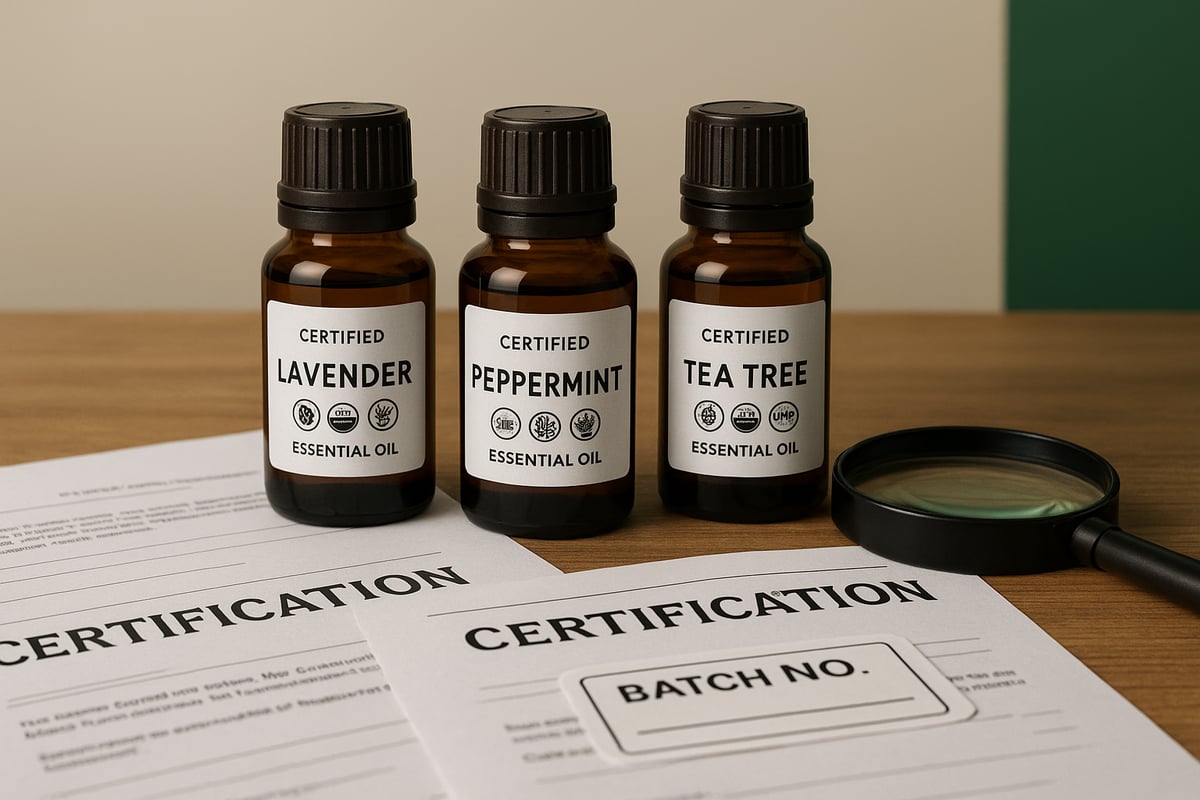
Certification and laboratory analyses (such as GC/MS reports) are standard. Leading suppliers, including Varuvo.nl and Helios Holland, supply only certified products. Quality requirements include scent, color, and viscosity. A reliable quality mark increases trust and makes a difference in the market. Want to know more? Read the detailed explanation about quality and certification of essential oils for wholesale.
Organic and Sustainable Certifications
Certification is one of the most important pillars within essential oil wholesale. The most common certifications are EU organic, Ecocert, and Skal. Strict requirements apply to cultivation, harvest, and processing for organic essential oils. Only oils from controlled agriculture qualify.
Organic certification not only offers an environmentally friendly image but also a clear added value for positioning towards conscious consumers and B2B customers. Documentation and regular audits are mandatory. Examples of popular organic oils are tea tree and lavender, which are increasingly requested by conscious customers.
| Quality mark | Requirements | Advantage for wholesale |
|---|---|---|
| EU organic | Strict cultivation rules | High reliability |
| Ecocert | International standard | Strong marketing value |
| Skal | Dutch inspection | Transparency and audits |
Safety and Legislation
Safety is central in essential oil wholesale. European legislation, such as REACH and CLP, sets clear requirements for ingredients, labeling, and warnings. The label must always include the batch number, ingredients, and any hazard pictograms.
When offering essential oils commercially, it is crucial to inform customers about safe use. Consider warnings for pregnancy, children, allergies, and photosensitizing oils such as citrus. Wholesalers are responsible for complete and accurate information provision. Regular updates and checks prevent problems and safeguard your company's reputation.
Packaging and Storage
The right packaging is essential for the quality and safety of essential oil wholesale. Dark glass bottles protect against light and oxidation, while aluminum or PET bottles are mainly used for bulk packaging. Child-safe closures are standard.
Storage should be cool, dry, and dark. This significantly extends shelf life. Each batch receives a unique batch number for full traceability. Consumer packaging differs from bulk packaging, but in both cases, correct labeling is mandatory.
- Use dark glass bottles for retail
- Aluminum/PET for larger volumes
- Child-safe closure and clear labels
- Keep oil out of direct sunlight and away from heat sources
Transparency and Documentation
Transparency is a decisive factor in essential oil wholesale. Suppliers must always provide analysis certificates and safety information. More and more customers are requesting a COA (Certificate of Analysis) or an allergen list.
Companies like Oliemeesters stand out through extensive product information and full documentation. This not only helps with audits but also builds trust with business customers. Transparency thus becomes a powerful marketing tool and is essential for long-term customer relationships.
Key Trends in Essential Oil Wholesale 2026
The essential oil wholesale market is changing rapidly in 2026. Innovation, sustainability, and digitalization set the pace. Below you’ll find the key trends shaping the sector this year and how buyers and entrepreneurs can respond immediately.
Organic & Sustainable as the Standard
Sustainability is no longer an option but a basic requirement within the essential oil wholesale market. Organic oils have become mainstream. Both companies and consumers demand transparency about origin and production. Wholesalers are significantly expanding their certified organic offerings, with a strong focus on pure, natural blends. Cruelty-free and vegan are now standard criteria. This shift strengthens the image of suppliers and increases the chance of long-term customer relationships. Want to know more about the current range? Check out the overview of the organic essential oil wholesale for the latest certified products and trends.
Private Label & Personalization
Within the essential oil wholesale market, demand for private label and customization is growing. More and more companies want to launch their own brands using white label solutions. This offers flexibility in scent, composition, and packaging. Personalization is becoming a distinguishing factor for both small entrepreneurs and large retailers. There is room for small batch production, allowing unique, tailor-made products to be brought to market quickly. This trend responds to the need for exclusivity and rapid innovation.
New Applications & Product Innovation
The essential oil wholesale market is seeing a strong increase in multifunctional blends and innovative applications. Oils are incorporated into wellness products, skincare, food items, and even household goods. Think bath salts, natural creams, diffusers, and scent stones. Seasonal and themed mixes are popular, with unique combinations tailored to current customer needs. Accessories like rollers and electric diffusers enhance ease of use. This product innovation keeps the market dynamic and appealing to new target groups.
Digitalization and E-commerce
Digitalization has transformed the essential oil wholesale market. Online platforms and webshops offer transparent prices, real-time stock, and fast delivery. Wholesalers like Varuvo.nl and Helios Holland invest in user-friendly ordering processes and digital customer service. Customers benefit from easy repeat orders, digital documentation, and direct communication. This speeds up the purchasing process and increases customer satisfaction. An online presence is now essential to stay competitive.
Local vs. Global Sourcing
Sourcing strategies within the essential oil wholesale market are more diverse than ever. Unique oils are purchased worldwide, but local production is gaining ground due to a lower ecological footprint and faster delivery times. European lavender and Australian tea tree illustrate the differences in price and quality between regions. Geopolitical developments and climate changes affect availability. Successful wholesalers combine local and international suppliers for a stable assortment.
Transparency, Quality & Storytelling
Transparency is a decisive factor in the essential oil wholesale market. Customers want to know where their oil comes from and how it is produced. Wholesalers increasingly share origin stories and quality information on product pages. Reviews and customer ratings are important for trust. Storytelling around sustainability and the production process sets brands apart and strengthens customer loyalty. Quality information is directly available online, creating a professional appearance.
Legislation, Safety, and Consumer Trends
Stricter regulations have a major impact on the essential oil wholesale market. Ingredients, claims, and labeling must comply with European standards. Consumers pay close attention to allergens and possible side effects. Clear safety instructions are mandatory. Education through blogs, knowledge bases, and customer service helps customers use essential oils safely and responsibly. Following laws and regulations protects both the wholesaler and the end user.
Practical Tips for Successful Buying & Selling in 2026
In 2026, there are plenty of opportunities for entrepreneurs active in the essential oil wholesale market. Successful buying and selling, however, requires a strategic approach and a keen eye for market developments. These practical tips help you get the most out of your essential oil wholesale business.
Smart Purchasing Policy & Inventory Management
An effective purchasing policy forms the foundation of a successful essential oil wholesale business. Regularly analyze your sales data to gain insight into popular oils and seasonal patterns. This prevents overstock and spoilage, ensuring you always respond to current trends.
Work with reliable suppliers and establish clear contracts. Make optimal use of volume discounts and bulk deals, especially for orders over €75 to €95, to improve your margins. Take seasonal peaks into account, such as higher demand for fresh blends in spring or relaxing oils in autumn.
Product Presentation & Customer Engagement
The presentation of your assortment determines the customer's first impression. Ensure professional packaging and clear labeling, including origin and certifications. Transparency about the quality and source of your products is essential for every essential oil wholesaler.
Informative product pages, storytelling, and sharing origin stories strengthen trust. Offer seasonal promotions or limited editions to surprise customers. Collect reviews and testimonials to convince new customers and invest in customer-focused service.
Education of Staff and Customers
Knowledge is a powerful sales tool within essential oil wholesale. Regularly train your staff on safe use, dosage, and the benefits of various oils. This ensures expert advice and prevents misunderstandings.
Organize webinars or workshops for business customers and consumers. Share practical guides, FAQs, or knowledge bases on your website. This builds authority and increases customer satisfaction. Certificates and clear instructions contribute to safe use and a professional appearance.
Responding to Trends & Innovation
The essential oil wholesale market is changing rapidly, with trends like personalization, private label, and innovative blends. Respond by quickly introducing new products and collaborating with wellness experts or influencers. Think of organic blends for specific target groups or unique seasonal mixes.
Want to start with private label? Then read the article How to start your own brand with private label essential oil for practical tips and inspiration. Stay flexible, test innovative applications, and stay alert to changing customer needs within the market.
Keeping Legislation & Regulations Up-to-Date
Legislation surrounding essential oil wholesale changes regularly. Stay informed about European and national requirements for labeling, allergen declaration, and safety information. Adjust your labels and product information in time to avoid fines and damage to your reputation.
Regular audits and quality checks are essential. Document all processes and ensure traceability is guaranteed. Communicate changes and new guidelines clearly to your customers. This builds trust and prevents legal issues.
Overview of Leading Wholesalers & Suppliers
The essential oil wholesale market is growing rapidly and the supply is becoming more diverse. Business buyers seek reliable partners who combine quality, transparency, and fast delivery. In this overview, you will find the main players, their unique features, and what to watch for when choosing a supplier.
Comparison of Wholesale Platforms
The essential oil wholesale market is dominated by platforms like Varuvo.nl, Helios Holland, and Oliemeesters. These providers offer a wide range from single oils to blends and accessories. Certifications such as Ecocert and EU organic are standard, giving buyers confidence.
According to the Essential Oils and Aromatherapy Market Forecast 2023-2032, the global market grows by 9.5 percent annually, resulting in a wide supply and competitive prices. Volume discounts, free shipping, and fast delivery times are important selection criteria when choosing an essential oil wholesaler.
| Wholesale | Assortment | Certification | Delivery time | Volume discount |
|---|---|---|---|---|
| Varuvo.nl | 1000+ products | EU organic, Ecocert | 1 day | Yes |
| Helios Holland | Wide range, blends | Organic | 3 days | Yes |
| Oil Masters | Pure oil, private label | Organic | 1-2 days | Yes |
Organic & Sustainable Specialists
More and more companies are choosing an essential oil wholesaler that focuses on organic and sustainable products. Oliemeesters and Helios Holland stand out with a fully certified range and transparent information about origin and production.
The popularity of natural fragrances and blends is increasing, partly thanks to insights from Fragrance Trends 2025 which emphasize the importance of sustainability and authenticity. Private label and white label solutions are available from these specialists, offering opportunities for entrepreneurs who want to launch their own brand. Transparency about certification and production processes is an important selling point.
Fast Delivery and Logistics
For many business customers, delivery speed is a decisive factor when choosing an essential oil wholesaler. Varuvo.nl often delivers orders placed before 9:00 PM the next day. Helios Holland guarantees that 90 percent of orders are delivered within three working days.
Free shipping from a certain minimum order amount and flexible logistics solutions ensure that businesses can manage their inventory efficiently. Customer reviews show that reliable delivery makes the difference in a competitive market. Even during unexpected busy periods, fast delivery remains an important competitive advantage.
Price Comparison & Volume Discounts
Prices at an essential oil wholesaler vary by product, volume, and purchase contract. Lavender oil, for example, is available from €19.95 per 10 ml, with volume discounts for larger quantities. Many suppliers offer transparent pricing, both excluding and including VAT.
Volume discounts, free samples, and extra accessories are often used to retain regular customers. When comparing prices, watch out for additional costs such as packaging and shipping. A clear overview of prices and terms helps make an informed choice for an essential oil wholesaler.
Customer Support & Extra Services
Excellent customer support is essential for a successful partnership with an essential oil wholesaler. Suppliers like Oliemeesters and Varuvo.nl offer personalized advice on the product range and applications, alongside knowledge bases, blogs, and workshops.
Private label and branding support are standard services at many wholesalers. Customer service via chat, email, and phone makes the ordering process simple and efficient. After-sales service, such as return policies and follow-up care, contribute to long-term customer relationships and strengthen trust in the essential oil wholesale market.
Now that you know everything about the opportunities and trends in the essential oil wholesale market for 2026, it's time to turn these insights into action. Whether you want to expand your range or optimally respond to the growing demand for organic and sustainable oils, reliable suppliers make the difference. At Oliemeesters, you'll find a wide selection of 100% pure, certified oils, perfect for salons, stores, and private labels. Want to benefit immediately from competitive prices and fast delivery so you never run out? Then check out the range and Order now - fast delivery within 1-5 days.