

The demand for wholesale sweet almond oil is growing rapidly, driven by its popularity in cosmetics, wellness, and food. Producers and brands are increasingly seeking pure, sustainable ingredients with reliable origins.
This guide offers a comprehensive overview for anyone purchasing or trading in sweet almond oil. We dive into market analysis, purchasing steps, quality criteria, price developments, current trends, and future outlook toward 2026.
Want to capitalize on opportunities in this dynamic market? Discover practical tips, current figures, and insights to strengthen your position as a wholesaler.
What is Sweet Almond Oil? Properties and Applications
Sweet almond oil is one of the most widely used vegetable oils worldwide. In the context of wholesale sweet almond oil, this oil forms an essential link for many companies in cosmetics, wellness, and the food sector. What makes this oil so special, where does it come from, and why is it so sought after in wholesale?
Definition and Origin
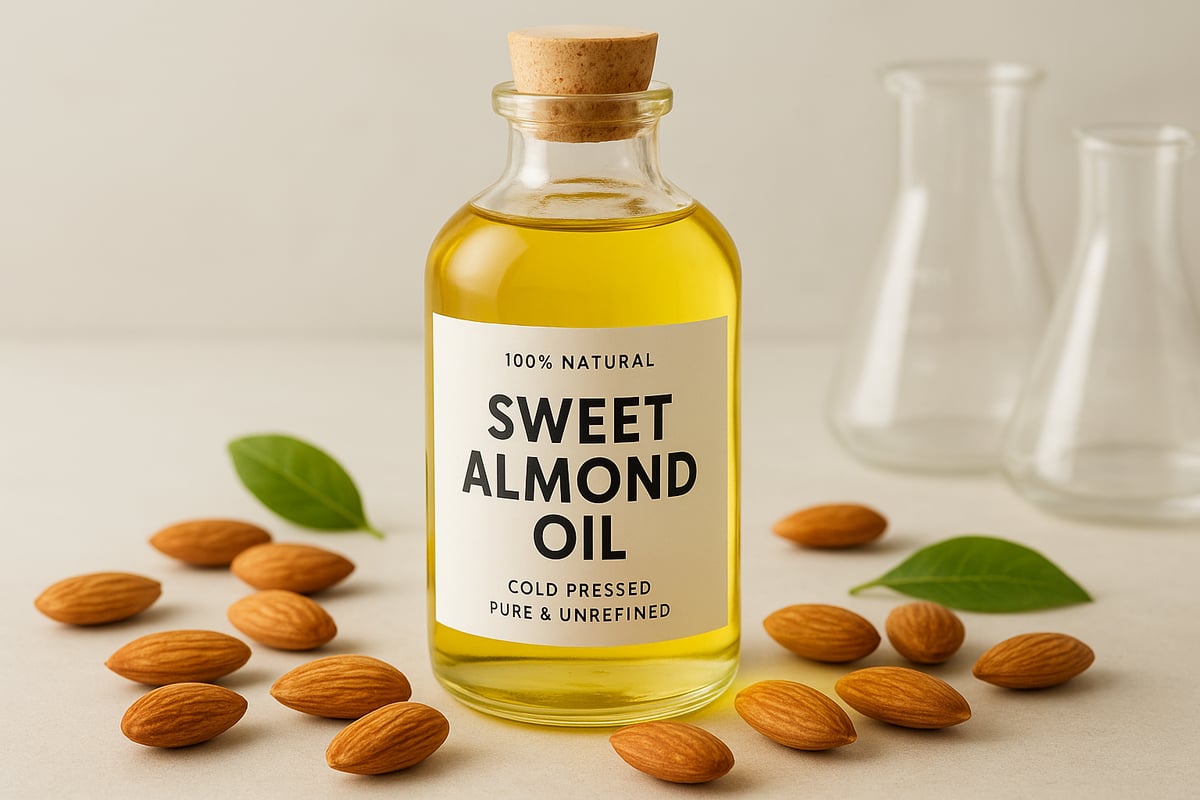
Sweet almond oil (INCI: Prunus amygdalus dulcis oil) is extracted from the seeds of the sweet almond tree. Key producing countries are Spain, Morocco, and California, where the climate is ideal for high-quality almond cultivation.
There is a clear difference between sweet and bitter almond oil: the sweet variety is safe for cosmetic and sometimes culinary use, while bitter almond oil contains natural toxins and is only used industrially.
Wholesalers usually offer organic or refined variants, depending on the desired purity and application. Organic oil is cold-pressed, while refined oil undergoes extra purification for stability.
According to recent figures, the global production volume of almond oil exceeds 80,000 tons per year, making wholesale sweet almond oil a stable source of raw materials.
Key Features
The appeal of wholesale sweet almond oil lies in its unique composition. The oil contains many essential fatty acids, vitamin E, and antioxidants. As a result, it naturally nourishes and protects the skin.
Thanks to its light texture, the oil absorbs quickly and is suitable for all skin types, even sensitive skin. Additionally, this oil is completely vegan, cruelty-free, and free from synthetic additives.
The stability and shelf life are excellent: cold-pressed oil remains good for an average of 12 to 18 months when stored cool and dark. This makes the oil very attractive for large-scale purchasing and long-term storage.
An overview of characteristics:
| Property | Value |
|---|---|
| Texture | Light, fast-absorbing |
| Main Components | Oleic acid, linoleic acid, vitamin E |
| Suitable for | All skin types |
| Vegan/cruelty-free | Yes |
Applications in Industries
Sweet almond oil wholesale is versatile across various sectors. In the cosmetics industry, the oil is used as a base in creams, lotions, massage oils, and hair care. It is also popular in the food industry, for example as a cooking oil or as an ingredient in supplements, provided it is food grade.
In wellness centers and spas, the oil is valued for its gentle effect and pleasant scent during aromatherapy or relaxing treatments. The demand for natural skincare continues to rise, prompting wholesalers to expand their offerings.
For buyers looking to compare the full range of base and carrier oils, the overview of organic carrier oils wholesale provides valuable information and guidance.
Benefits for Wholesalers
For wholesalers, sweet almond oil offers clear advantages. The oil is widely used in diverse end products, ensuring steady demand and attractive margins.
Additionally, the oil is suitable for private label and white label projects, allowing companies to easily develop their own brand. Flexible packaging options – from bulk containers to drums and jerrycans – enable efficient adaptation to various customer needs.
Extensive documentation and certification, such as PDS, SDS, and COA, are readily available. This simplifies quality control and meets the requirements of professional buyers within the sweet almond oil wholesale market.
The Wholesale Market for Sweet Almond Oil: Analysis & Developments
The wholesale market for sweet almond oil is developing rapidly, driven by growing demand from both the cosmetics and food industries. Producers and distributors respond to this dynamic with innovative products, certifications, and efficient distribution models. In this section, we analyze market size, key players, pricing, regulations, and the shift towards sustainability within the sweet almond oil wholesale market.
Market Size and Growth
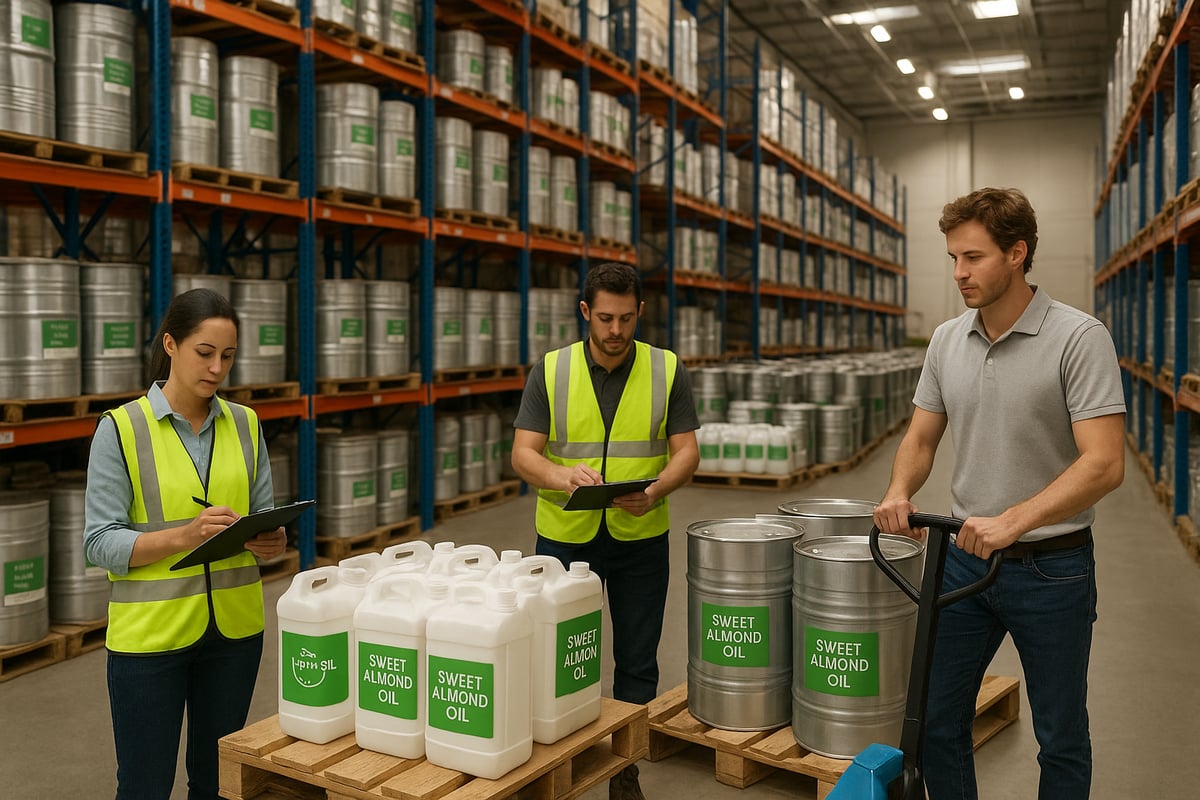
The global market value for sweet almond oil wholesale continues to rise. In 2023, the market was estimated at over 1.2 billion euros, with an expected annual growth of 6 to 8 percent until 2026. Europe is considered one of the largest sales markets, with Germany, France, and the Netherlands as important importers. The largest exporting countries are Spain, the United States, and Morocco. Demand for organic variants is growing above average, partly due to consumer trends toward natural products. According to the OECD-FAO world oilseed and protein crop harvest forecast 2020 to 2030, global production of oilseeds is steadily increasing, which is favorable for the stability of the sweet almond oil wholesale trade.
Key Market Players and Distribution Channels
Within the sweet almond oil wholesale trade, both large international producers and specialized European suppliers are active. Well-known names include Cargill, AAK, and smaller organic producers from Spain and Morocco. Distribution takes place through direct contracts with producers, specialized distributors, and increasingly via online B2B platforms. Private label providers make it possible to launch products under one’s own brand, which is especially interesting for smaller companies. The choice of distribution channel influences price, delivery reliability, and flexibility within the sweet almond oil wholesale trade.
Price Developments and Influencing Factors
The price of sweet almond oil wholesale is determined by a mix of factors. Harvest results, climate changes, and geopolitical developments directly affect availability and thus the price. Organic and fair trade certification usually results in a higher price due to stricter requirements for cultivation and traceability. There is a clear price difference between refined and cold-pressed oil, with the cold-pressed variant positioned as premium. Market fluctuations can challenge wholesalers to purchase flexibly and revise price agreements in a timely manner.
Regulations and Quality Requirements
The sweet almond oil wholesale trade must comply with strict regulations, both within Europe and internationally. Products must be correctly labeled according to INCI names, and certifications such as COSMOS, Ecocert, and organic labels are often required. Traceability is essential, as well as providing allergen lists and product specifications. Stricter regulations, for example regarding allergens, force wholesalers to maintain transparent documentation and increased quality controls. This not only protects the consumer but also strengthens trust in the sweet almond oil wholesale trade.
Sustainability and Transparency
Sustainable cultivation and fair production processes are gaining more attention within sweet almond oil wholesale. Both producers and buyers invest in origin information and transparency in the supply chain. Certifications such as organic and fair trade are no longer a luxury but rather a requirement for access to the European market. Consumers increasingly choose ethically produced oils, encouraging wholesalers to make their assortment and supply chain more sustainable. Transparency and sustainability are therefore decisive for the future success of sweet almond oil wholesale.
Step-by-Step Guide: Buying Sweet Almond Oil Wholesale
Successfully purchasing sweet almond oil wholesale requires a structured approach. By carefully following each of the five steps, you maximize the quality and efficiency of your purchasing process. This guide offers practical tools for both beginner and experienced buyers.
Step 1: Determine Purchasing Needs and Specifications
Start by analyzing your annual or periodic need for sweet almond oil wholesale. Determine how many liters or kilos you need per batch or per year. This prevents shortages or overstock.
Choose between different qualities such as organic, refined, or cold-pressed. Each application has different requirements. For cosmetics, organic and cold-pressed oils are often preferred, while refined oil suffices for technical uses.
Define the desired certifications, such as organic, vegan, or halal. Consider the specific requirements of your sector, for example, additional allergen information for the food industry. Document these specifications carefully for efficient supplier selection.
Step 2: Select Reliable Suppliers
A reliable partner for sweet almond oil wholesale is essential. Pay attention to the supplier's reputation, check if they have up-to-date certifications, and always request product specifications such as PDS, SDS, and COA.
Test samples for scent, color, and consistency. Transparency about origin and production methods is a must. Compare suppliers through platforms like All Organic Natural Oils to gain insight into the range and level of documentation.
Statistics show that more and more suppliers can provide complete documentation. This increases the traceability and reliability of the supply chain.
Step 3: Price Comparison and Negotiation
Compare bulk prices and volume discounts from various suppliers of sweet almond oil wholesale. Pay attention not only to the price per liter but also to additional costs such as shipping and import duties. Some suppliers offer better terms for larger volumes or long-term partnerships.
Negotiate contracts with fixed prices to limit fluctuations. Ask about price differences between packaging units, for example between 5-liter jerrycans and 190-kilo drums. Transparency in pricing prevents surprises later on.
Step 4: Ordering and Logistics
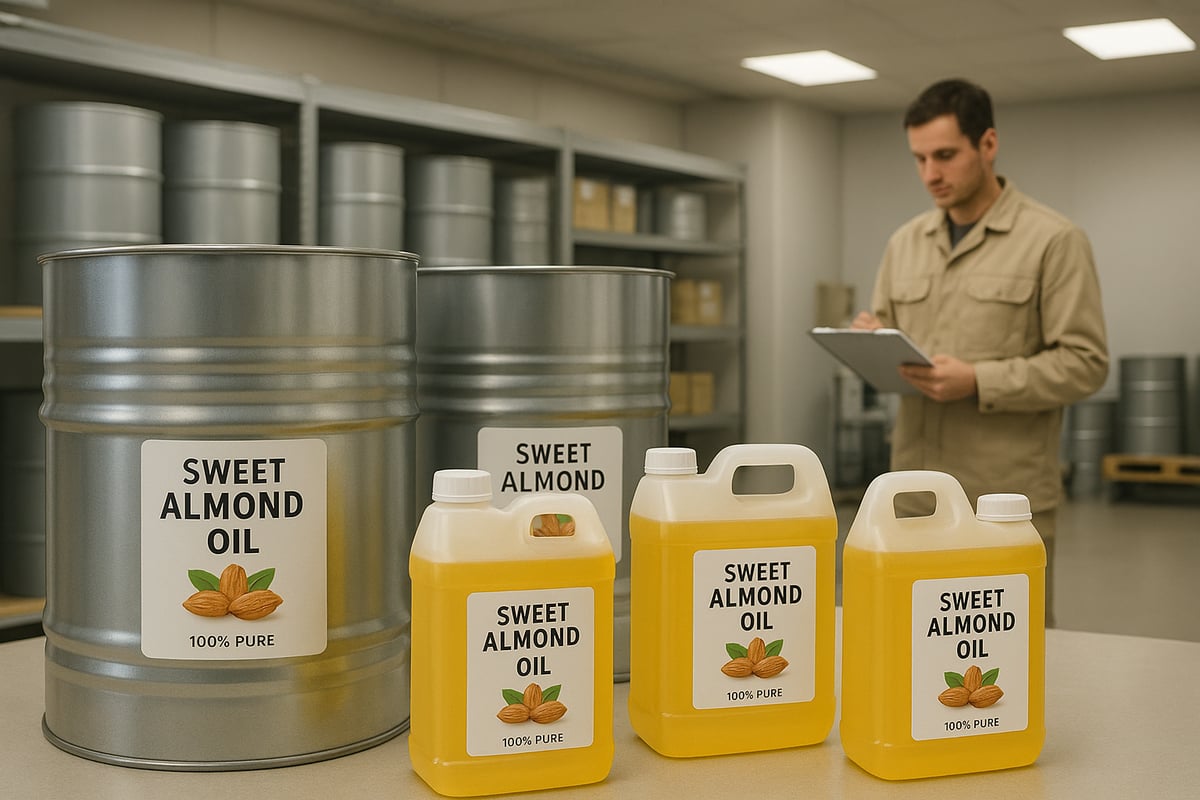
Place your order via a webshop or direct contact with the sweet almond oil wholesale supplier. Coordinate delivery dates with your production schedule and check storage options. Choose suitable packaging, such as drums, jerrycans, or IBCs, depending on the desired batch size.
Note the average delivery times within the EU, usually 1 to 5 working days. Check upon receipt that the packaging is undamaged and all documents are present. Efficient logistics prevent production downtime and quality loss.
Step 5: Quality Control and Aftercare
After receiving the sweet almond oil wholesale shipment, check the batch for scent, color, and consistency. Consult the accompanying documentation and perform additional tests if necessary for allergens or oxidation stability.
Store the oil in a cool, dry, and dark place for optimal shelf life. Advise staff on correct use and storage. In case of deviations or complaints, prompt follow-up with the supplier is crucial for continuity and customer satisfaction.
Quality, Certification, and Safety in Purchasing
Quality, certification, and safety form the backbone of a successful sweet almond oil wholesale business. Only by meeting strict requirements can a wholesaler maintain the trust of business customers. Every aspect, from raw material analysis to storage, requires a professional approach.
Quality Criteria for Sweet Almond Oil
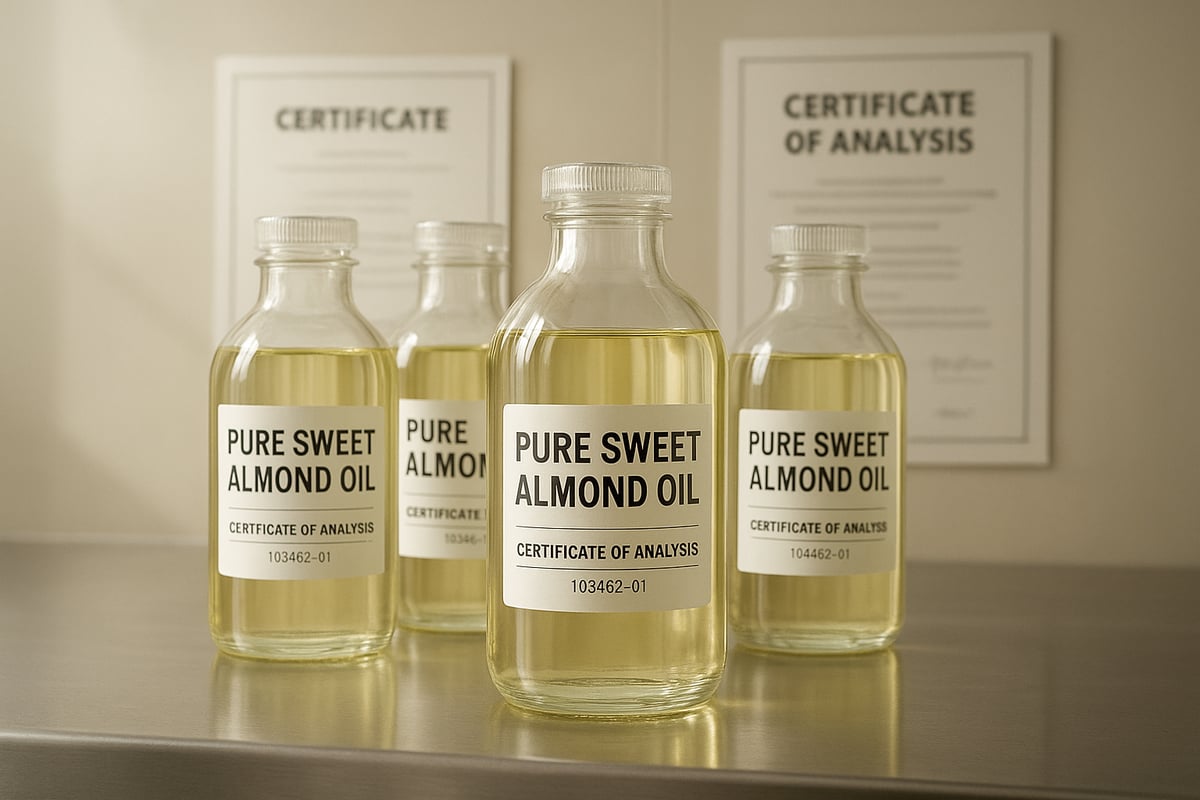
For a high-quality sweet almond oil wholesale supplier, it is essential to pay attention to purity, scent, color, and consistency. The fatty acid profile is checked through laboratory analyses, with particular focus on the oleic acid and linoleic acid content. A clear, pale yellow color and a mild scent indicate freshness.
Batch variations can occur due to weather conditions during harvest. Therefore, it is advisable to always request batch certificates (COA). Organic, cold-pressed oil stands out with a richer nutrient profile. Want to know more about the properties? Then check Sweet Almond Oil I Organic & Cold-Pressed.
Certification and Documentation
In the sweet almond oil wholesale market, certifications such as organic (EU), COSMOS, and Ecocert are crucial for market access. Vegan and halal certificates expand the target audience. Suppliers must provide complete documentation, such as Product Data Sheets (PDS), Safety Data Sheets (SDS), and IFRA certificates.
An overview of important certificates:
| Certificate | Application |
|---|---|
| Organic (EU) | Food, Cosmetics |
| COSMOS | Cosmetics |
| Plant-based | Cosmetics, Food |
| Halal | Food, Cosmetics |
Full traceability is a must for B2B customers in the sweet almond oil wholesale market.
Safety and Allergens
Safety is essential for every sweet almond oil wholesaler. According to the EU Cosmetics Regulation, allergens must be clearly listed. Always test new batches for allergens, especially for products intended for sensitive skin.
It is advised to test finished products first with a patch test. Sweet almond oil is usually intended for external use unless otherwise certified. Common allergic reactions include redness or itching, especially in people with nut allergies.
Storage and Shelf Life
Proper storage is indispensable for quality in the sweet almond oil wholesale market. Store oil in a cool, dry, and dark place to prevent oxidation. The average shelf life is between 12 and 18 months, depending on the refining process.
Packaging plays a role: smaller batches in dark bottles often retain their quality longer. Large drums or IBCs require extra attention to hygiene. Storage advice and batch size directly affect product quality and customer satisfaction.
Pricing, Margins, and Cost Structure
A good understanding of price composition and margins is essential for every sweet almond oil wholesaler. The total cost structure determines not only profitability but also the competitive position in the market. Factors such as raw material prices, packaging, transport, and global fluctuations play a major role.
Price Composition of Sweet Almond Oil
Pricing in the sweet almond oil wholesale market starts with the cost of the almonds themselves. Added to this are production costs, refining, and packaging. Logistics and transport are also decisive, especially in international trade. Global market prices and seasonal influences cause fluctuations.
A comparison between bulk and small packaging shows clear price differences:
| Packaging unit | Average price per kg |
|---|---|
| 2.5L Jerrycan | €13,50 |
| 25L Drum | €11,00 |
| 190kg Drum | €9,20 |
The choice of accessories and packaging, such as those found at Accessories for oil wholesale, also affects the total cost price. This keeps the price structure for wholesalers transparent and manageable.
Volume Discounts and Margins for Wholesale
In the sweet almond oil wholesale market, volume discounts are standard. The larger the volume, the lower the price per liter. This allows for attractive margins, especially when reselling to retailers or private label customers.
Typical margins for wholesalers range between 15% and 30%. The price difference between a 2.5L jerrycan and a 190kg drum can be up to 30%. This makes it worthwhile to purchase larger volumes and negotiate sharply.
List of benefits with volume discounts:
- Lower purchase price per kg
- Better margin on resale
- Predictable inventory costs
Strategic purchasing is therefore a must for every sweet almond oil wholesaler.
Additional Costs and Risk Factors
In addition to the base price, every sweet almond oil wholesaler faces additional costs. Think of transport, import duties, and customs fees. Fluctuations in supply and demand can strongly affect the price, as can geopolitical tensions or unexpected quality problems.
Some risk factors are:
- Unstable harvests due to climate change
- Rising transport rates worldwide
- Quality issues with bulk imports
It is important to calculate these costs and risks in advance. This keeps the margin healthy, even with market fluctuations.
Pricing Strategy for Resellers and Private Label
For resellers and private label partners within the sweet almond oil wholesale market, a well-thought-out pricing strategy is essential. All costs, from raw materials to packaging, must be factored into the final product's selling price. Positioning plays a major role here: do you choose a premium brand or a mainstream line?
Successful strategies include:
- Focus on sustainable and organic certification
- Flexible packaging options for different target groups
- Transparent communication about price structure
By combining smartly and purchasing efficiently, every sweet almond oil wholesaler can stand out in a competitive market.
Trends and Future Outlook: Sweet Almond Oil until 2026
The market for sweet almond oil wholesale is developing rapidly towards 2026. New trends are emerging, with sustainability, innovation, and digitalization at the center. Wholesalers who want to respond to these developments must be flexible and forward-thinking. In this overview, we highlight the main trends and future prospects.
Sustainability and Ethical Production
Sustainability is a driving force within the sweet almond oil wholesale market. The demand for organic and fairtrade-certified oils is growing strongly, partly due to stricter requirements from consumers and B2B customers. Suppliers are investing more in responsible cultivation and fair labor conditions. This results in a larger market share for producers who can demonstrate sustainability. Wholesalers who stand out with sustainable products, such as through organic essential oils wholesale, build a strong reputation. Transparency about origin is becoming the standard.
Innovations in Product Development
Innovation is accelerating within the sweet almond oil wholesale market, especially in cosmetics and wellness. New product applications such as serums, multifunctional blends, and vegan formulas are gaining ground. Combinations with other natural oils provide unique properties and strengthen the clean beauty image. Wholesalers increasingly offer customization, for example private label blends with specific claims. The trend towards vegan and allergen-free products continues, offering opportunities for innovative collaborations. Responding to these trends requires flexibility and a keen eye for consumer demand.
Digitalization and E-commerce in Wholesale
Digitalization is changing the way sweet almond oil wholesale operates. Online marketplaces and direct purchasing through webshops are increasing, making processes more efficient. In 2023, about 65% of all B2B orders were placed online, an increase compared to previous years. Automation of inventory management and order processing offers wholesalers more control and speed. Transparent price comparisons and real-time stock information make the market more accessible. Digitalization stimulates competition but also offers opportunities for personal service and advice.
Regional Shifts and New Markets
The sweet almond oil wholesale market is seeing growth outside Europe, especially in Asia and North America. While Europe remains traditionally leading, new opportunities arise through local production and imports in other regions. Local players benefit from shorter supply chains and faster delivery. At the same time, demand is shifting from generic bulk products to niche and premium segments, such as organic or cold-pressed oil. International competition is increasing, making innovation and positioning more important. Wholesalers must respond to this dynamic to stay relevant.
Outlook: Market Expectations through 2026
The outlook for the sweet almond oil wholesale market is positive. Global demand is expected to grow annually by 6 to 8%, driven by the popularity of natural and sustainable ingredients. Stricter regulations and conscious consumers are pushing wholesalers towards more transparency and innovation. Flexibility in assortment and packaging is becoming indispensable. Investments in sustainability and digitalization make the difference. Those who embrace the trends and quickly respond to customer needs will strengthen their market position through 2026.
Now that you know exactly what to look for when purchasing sweet almond oil and which trends are important towards 2026, you can immediately respond to the growing market demand. If you want to benefit from pure quality, transparent certification, and fast delivery for your business or brand, take a look today at our selected carrier oils. This way, you can quickly adapt to the latest developments and always be assured of reliable stock and expert advice.